

After a painful breakup or a run of disappointing dates, you may feel tired of hoping for a relationship. You might want a short break, a different approach to dating or a life that does not centre on romance. You can take those feelings seriously without deciding your whole future today.
Start with what would make life more manageable now. That may be distance from an ex, fewer dating conversations, practical support or time for interests and people you have missed. Choosing to be single is a valid option, whether it lasts a little while or becomes your preference.
On this page
1. Name what you need a break from
“I’m giving up on love” can describe several different experiences. You may be grieving one relationship, frustrated with dating apps, exhausted by repeated uncertainty or feeling pressure from people who think you should have a partner.
Try completing the sentence: “What I want to stop dealing with is…” Be as specific as you can. A wish to stop checking an ex’s messages may lead to a contact boundary. A wish to stop spending every weekend on dates may lead to a change in how you use your time.
If you are still in a relationship, consider the concerns about that relationship separately from the question of whether you will date again. You do not need another person waiting in the wings to decide that a relationship no longer works for you. If you are dealing with a separation, our guide to letting go after a breakup explores feelings, contact and daily decisions.
2. Respond to hurt without judging your worth
A rejection or breakup can bring thoughts such as “I am too difficult to love” or “Everyone else has figured this out.” Notice when a painful event is becoming a broad judgement about who you are. One person’s decision does not provide a complete account of your character or your future.
You can reflect on something you wish you had handled differently without taking responsibility for another person’s dishonesty, cruelty or choices. If there is a lesson you want to use, make it specific: asking about expectations sooner, saying when a plan does not suit you or seeking help with a recurring difficulty.
There is no need to force a positive description of an experience that hurt. A more balanced sentence might be: “This mattered to me, and it did not work out. I can be disappointed and still make decisions that support me.” Use words that feel believable to you.
3. Look at the pressure around your choices
Family expectations, friends’ milestones and social media can make being single feel like being behind. Ask which wishes are yours and which expectations you feel obliged to meet. Marriage, partnership and single life can carry different meanings for different people.
Separate practical questions from comparisons. For instance, you may want to review housing plans or decide how you would like to spend holidays. Those are concrete matters you can address, even while your feelings about dating remain uncertain.
You can also set limits on other people’s questions. “I’ll tell you if there is news I want to share” or “I’m focusing on other things right now” may be enough. You do not owe everyone a detailed explanation or a deadline for finding a partner.
4. Make a pause that works for you
A break from dating can be as simple as closing an app for a while, declining introductions or stopping conversations that you no longer want to continue. Consider what you want to change and what you would like to keep. You might still enjoy social outings without treating them as opportunities to meet someone.
Choose a manageable plan for the next week or two. It could include an evening without dating notifications, a practical task you have postponed and one activity you enjoy. A review date is optional; it can be a chance to check how you feel rather than a promise to start dating again.
If you are currently seeing someone, communicate what you are choosing when it is safe to do so. A pause does not automatically establish an agreement that another person will wait, remain exclusive or understand your intentions. Be clear about what you can offer.
5. Find connection beyond romance
Think about the kinds of contact you miss: companionship, being listened to, shared activities or feeling part of a community. Different needs may call for different kinds of connection. Romantic status alone does not tell you how connected someone feels.
If you have a trusted person, you might ask for something specific, such as a short call or company while doing an errand. If you do not have that support, an accessible group, class or community activity may offer a place to begin. Consider cost, transport, energy and whether the setting feels welcoming.
The NHS guidance on loneliness suggests small steps, talking about feelings and exploring activities or support. It also notes that people can feel lonely within relationships. If loneliness or low mood is becoming hard to cope with, consider speaking with a healthcare professional or an appropriate local support service.
You can value time alone as well. Notice whether solitude is giving you rest and freedom, whether you want more contact or whether your needs vary from day to day.
6. Revisit your choices when you want to
You may later feel interested in dating, or you may continue to prefer single life. Either choice can sit alongside a meaningful life, close friendships and plans that matter to you. A new relationship is a possibility, and its timing or outcome cannot be promised.
If you do return to dating, begin at a pace you can manage. Consider what you want to ask earlier, what behaviour you will accept and how you will protect time for the rest of your life. You can enjoy meeting someone while allowing mutual interest and compatibility to become clearer over time.
For now, choose one thing that addresses the need you identified at the start. That could be a boundary, a conversation, a practical arrangement or some rest. You can make room for uncertainty while taking care of the life you have today.
Read the infographic in text
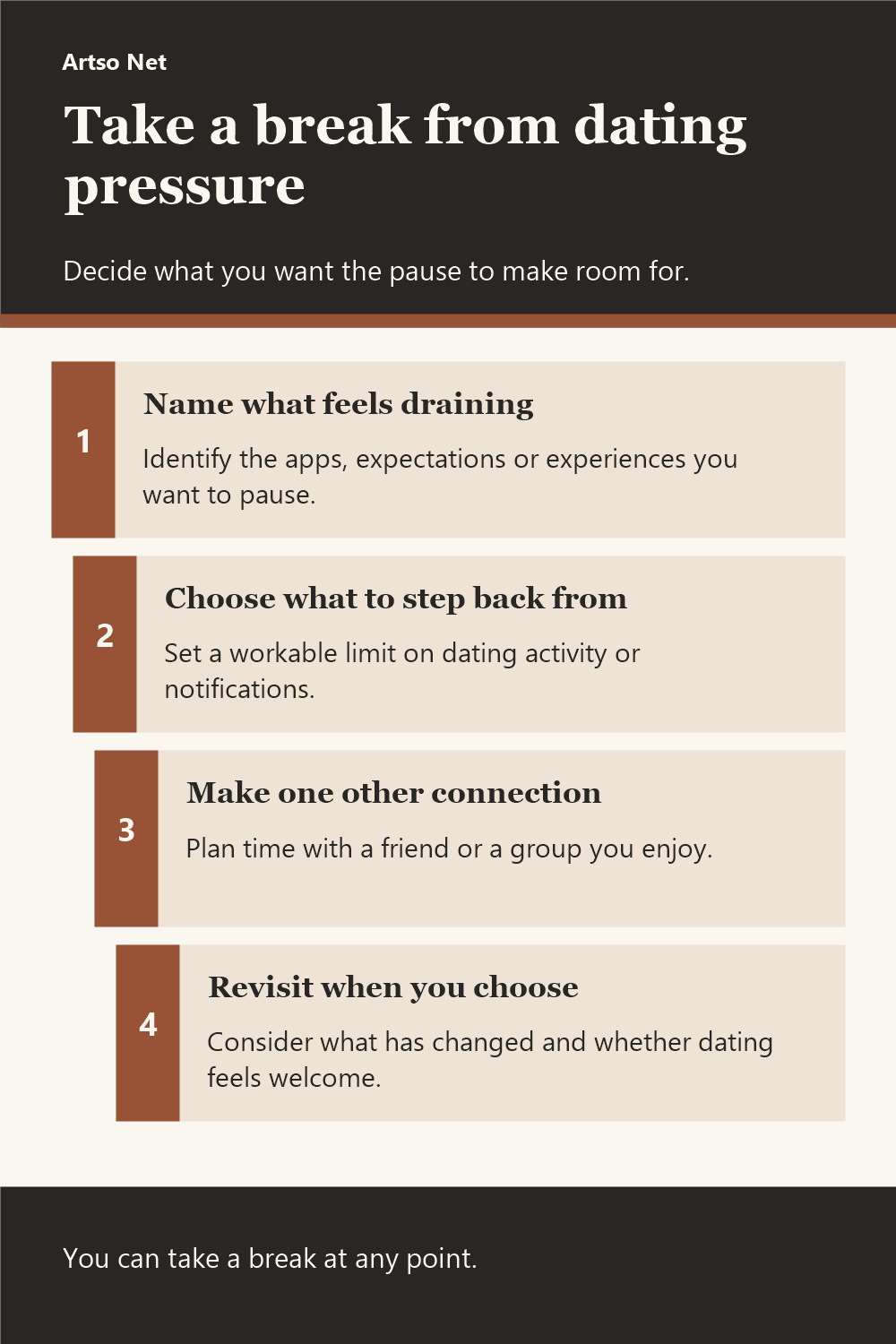
Take a break from dating pressure Decide what you want the pause to make room for.
- Name what feels draining Identify the apps, expectations or experiences you want to pause.
- Choose what to step back from Set a workable limit on dating activity or notifications.
- Make one other connection Plan time with a friend or a group you enjoy.
- Revisit when you choose Consider what has changed and whether dating feels welcome.
You can take a break at any point.