

A sexual dream can leave you amused, curious, uncomfortable or worried about what it says about your relationship. The person or situation in it may be surprising. You do not need to turn that surprise into a confession, a prediction or a decision about your life.
There is no dependable dictionary that can tell you what a particular sex dream means. If you want to reflect on one, start with your own feelings and circumstances, while keeping a distinction between a dream and the choices people make when awake.
On this page
Understand the limits of interpretation
The National Institutes of Health explanation of sleep notes that scientists are still uncertain why we dream. Dreams are often most vivid during REM sleep, but can occur at other stages too. A vivid memory on waking does not, by itself, give a dream a fixed message.
Cleveland Clinic’s discussion of dream meaning also explains that there is no consistent, scientifically established link between a specific dream scene and a particular meaning. Personal context matters more than assigning every character the same symbolic role.
That leaves room for curiosity without certainty. A dream about a colleague does not establish attraction, ambition or a wish to change your job. A dream about an ex does not prove you should reconnect or that you have failed to move on. You can notice the experience without acting on it.
If dreams have spiritual significance for you, you may choose to explore that meaning through reflection or a trusted conversation. Treat an interpretation as a possibility you can consider, rather than an instruction that overrides your judgement or another person’s boundaries.
Notice what stayed with you
If reflection feels useful, write a brief note about the emotion you remember: closeness, excitement, embarrassment, fear, comfort or something else. You can leave out explicit details. Then ask whether that feeling connects with anything you are already noticing in your waking life.
A dream about a crush might prompt you to think about attraction, but the dream cannot settle what you want or what they feel. Consider your waking interest separately. If you are thinking about asking a friend out, Thinking About Dating a Friend: Questions, Consent and Shared Choices offers questions that depend on real conversation.
A friend, celebrity or colleague in a dream does not have to stand for an admired trait or a hidden goal. You may have an association with that person, or you may not find a useful connection at all. It is fine to leave the question unanswered.
Try separating three things in your notes: what you remember, what you felt and what you actually know. “I woke feeling lonely” describes your experience. “This proves my relationship is wrong” adds a conclusion that needs more information.
Keep dreams and relationship evidence apart
A dream involving infidelity can feel upsetting, but it is not evidence that a partner has cheated or intends to. Your own dream about someone else is not an action you have taken against a relationship agreement. Feelings on waking can deserve care without becoming accusations or a requirement to make amends.
If something in the relationship is bothering you, discuss the actual issue: a changed agreement, time together, affection or an unanswered question. You might say, “I have been missing our time together. Can we plan something?” You do not need to present the dream as proof of the problem.
Can You Tell Whether a Partner Will Cheat? explores the limits of prediction and the value of discussing agreements. For a conversation about closeness, Building Intimacy: Trust, Care and Clear Communication focuses on everyday interaction.
Choose what you want to share
You can keep a dream private. Sharing is an option, not a test of honesty or love. Before describing sexual details, ask whether the other person wants to hear them, particularly if the dream involves someone they know. Respect a no or a request for less detail.
If you want reassurance, you can ask for that directly: “I woke up unsettled and would appreciate some company.” If you want to discuss attraction or a relationship agreement, choose clear words about that waking concern. A dream should not become a way to pressure someone into touch, sex or a new arrangement.
The people who appear in a dream have their own privacy and boundaries. They do not owe you a response, an explanation or participation in its interpretation. Keep workplace interactions professional rather than assuming a dream creates a reason to disclose intimate details to a colleague.
Respond when a dream is upsetting
An unwanted or disturbing scene, including one involving a person you would never choose in waking life, can be difficult to remember. The content alone does not establish your intentions, character or a diagnosis. You do not have to find a positive symbolic explanation for it.
Give yourself time to notice where you are and return to an ordinary morning activity. Writing about the dream is optional; stop if the exercise leaves you more distressed. You can seek support without recounting every detail or deciding what the dream “really” means.
If distressing dreams keep returning, disrupt sleep or affect your daily life, talk with a healthcare professional. Cleveland Clinic describes recurring nightmares and sleep problems as concerns that can be assessed and treated. If you move in your sleep or risk injuring yourself or someone beside you, mention that specifically when seeking help.
You can choose the response that helps now: let the dream pass, reflect briefly, discuss a real concern or get support for troubled sleep. None of those choices requires treating a dream as a verdict on your relationship.
Read the infographic in text
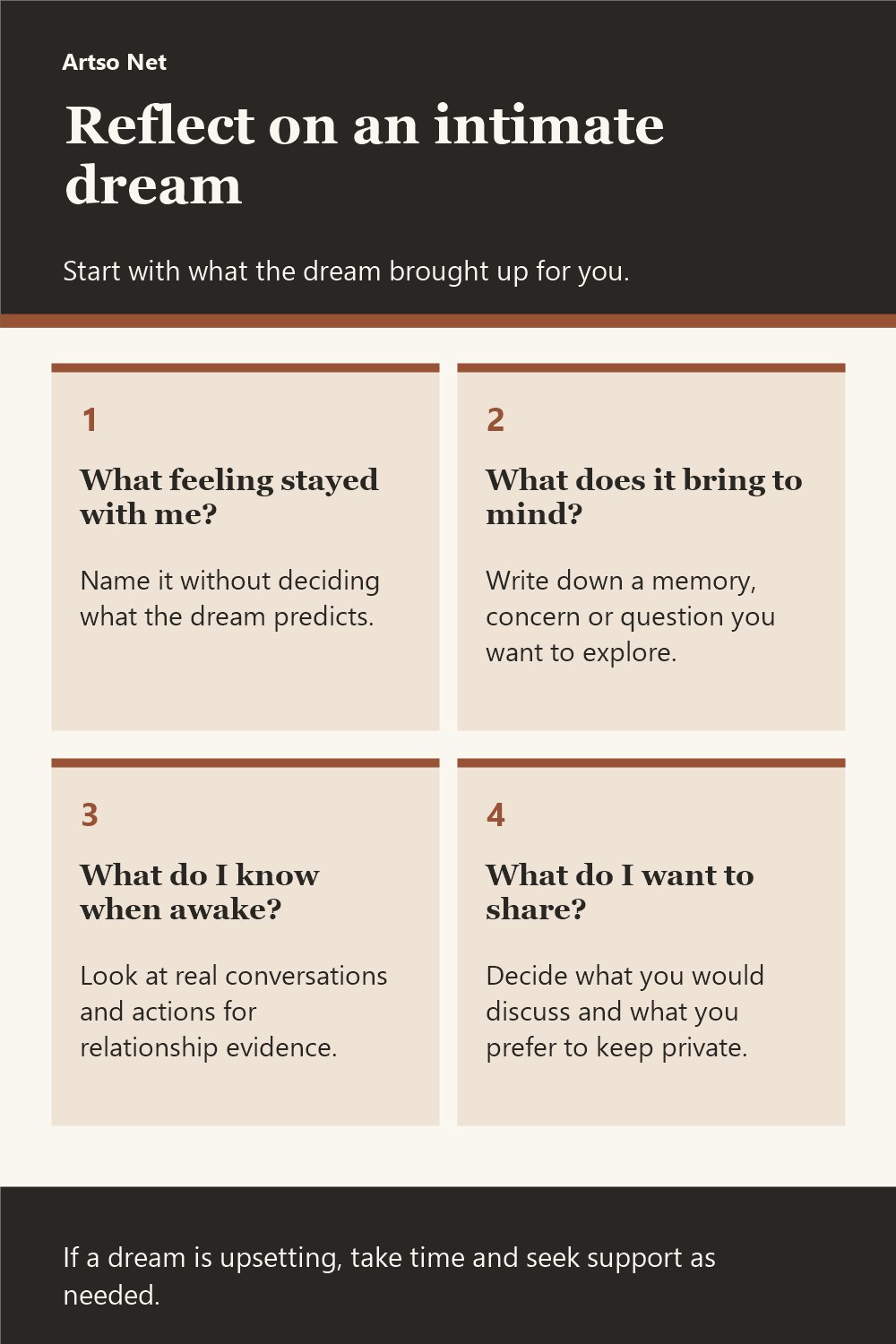
Reflect on an intimate dream Start with what the dream brought up for you.
- What feeling stayed with me? Name it without deciding what the dream predicts.
- What does it bring to mind? Write down a memory, concern or question you want to explore.
- What do I know when awake? Look at real conversations and actions for relationship evidence.
- What do I want to share? Decide what you would discuss and what you prefer to keep private.
If a dream is upsetting, take time and seek support as needed.