

A deeper connection can begin with an ordinary exchange: someone remembers what matters to you, listens to an answer or follows through on a plan. You do not have to reveal everything about yourself or become unusually outgoing to make a relationship meaningful. Start with the kind of contact you would like, then look for opportunities that leave room for both people’s interests, comfort and choices.
In this article
Choose a connection you want to make room for
You might want a closer friendship, more time with a relative or a relationship in which you feel understood. These wishes do not all need the same next step. Consider whether there is someone you would enjoy contacting or a setting where you could meet people around a shared interest.
Make an invitation easy to understand and easy to decline. “Would you like to have a short call this weekend?” gives someone a clearer choice than a general promise to catch up. Offer an alternative if it suits you, then leave them room to answer.
If the invitation is declined, that does not establish your worth or explain everything about the other person’s feelings. Notice whether they suggest another time and whether contact develops over several exchanges. You do not need to keep pursuing someone who is not taking part.
Listen with curiosity and share at your own pace
A useful conversation leaves space for an answer you did not expect. Ask about something the person has mentioned, listen to the response and check what you have understood. You could ask, “Is the difficult part the workload, or not knowing what happens next?” rather than assuming you already know.
The NHS guidance on healthy relationships describes active listening as checking your understanding through a question or by reflecting what someone has said. The aim is to understand the person, rather than prepare your next speech while they are talking.
You can share something personal without sharing everything. Begin with a preference, an experience you are comfortable discussing or a feeling you can name. Trust can develop as you see how someone handles what you choose to tell them.
You may prefer a message to an unexpected call, or find it easier to talk while doing something together. Ask what works for the other person too. Eye contact, frequent messages and long conversations are not universal requirements for caring about someone.
Talk about what matters without requiring agreement
Values, hopes and beliefs can offer ways to understand each other. Ask a specific, open question, such as what the person enjoys about a tradition or what they hope to make time for. You can be curious without adopting the same view.
If spiritual beliefs matter to you, you can explain their personal meaning without claiming they reveal another person’s thoughts or future. Leave space for a different interpretation. Respect includes being able to disagree without ridicule or pressure.
Closeness can look different across relationships. One friend may enjoy frequent contact; another may connect through occasional long conversations. Discuss a practical mismatch rather than treating one preferred style as the only evidence of affection.
Notice whether care can move both ways
Look for a pattern in which both people can speak, make requests and have limits. Support will not always be equal in every week. Illness, caring responsibilities or a difficult period may change what someone can offer.
Still, you are allowed to notice if you are repeatedly dismissed or expected to give more than you can manage. Ask for something specific: “Could we make time to talk about what has been happening for me as well?” Their response gives you information about the arrangement.
Care is not a transaction in which praise, favours or gifts purchase closeness. Check whether help is wanted, give only what you freely choose and avoid using what you have given as a reason someone should owe you attention.

Choose a manageable next step
You might send one invitation, ask a more attentive question or thank someone for a particular kindness. Choose an action you can carry out without making yourself responsible for the whole relationship.
If past experiences make trust difficult, you can move slowly and seek support while still having relationships. There is no requirement to resolve every painful feeling before deserving companionship.
Review how the connection feels over time. You may want to continue, change the kind of contact or put your energy elsewhere. Meaningful relationships leave room for both closeness and the people you each are outside them.
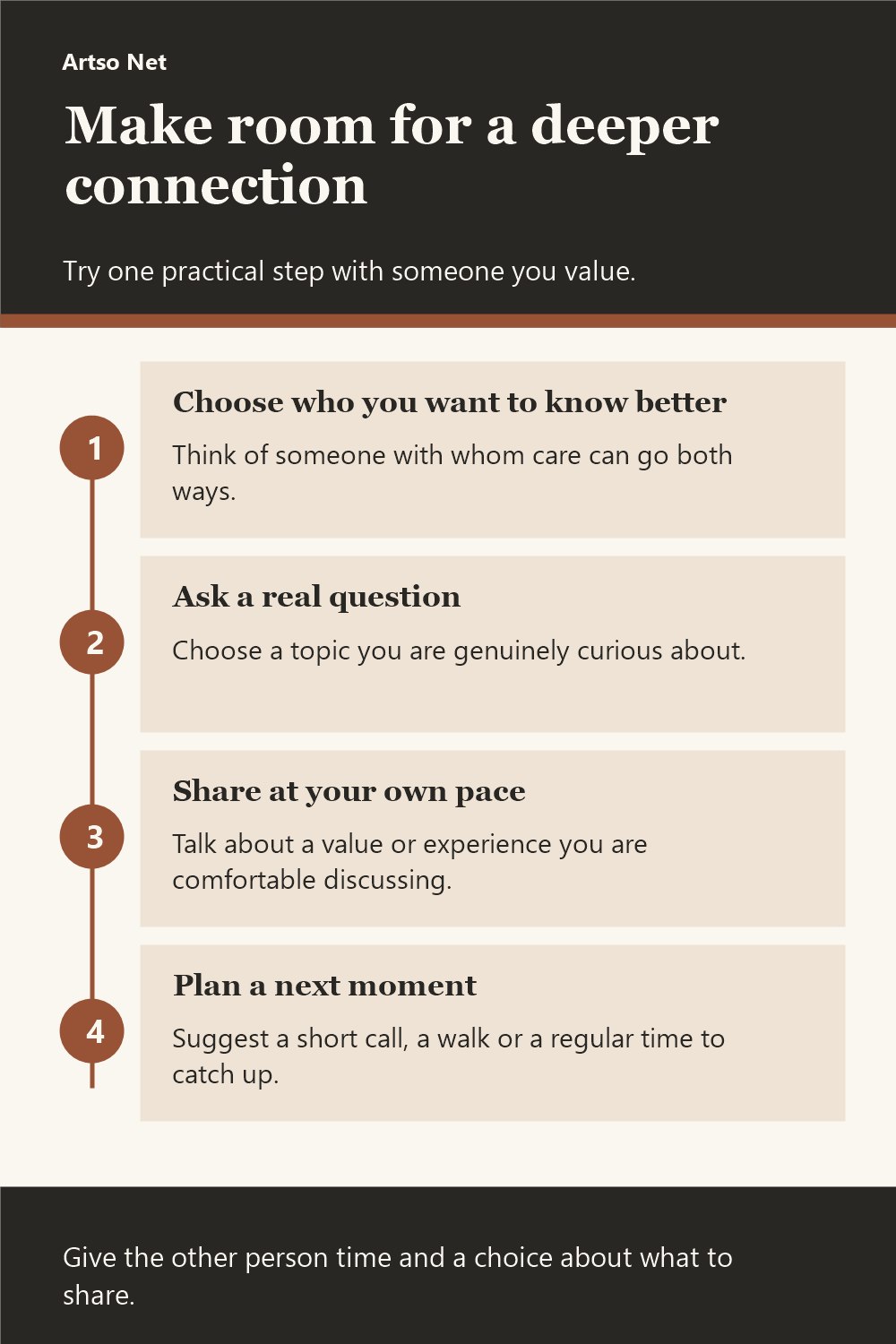
Read the infographic in text
Make room for a deeper connection Try one practical step with someone you value.
- Choose who you want to know better Think of someone with whom care can go both ways.
- Ask a real question Choose a topic you are genuinely curious about.
- Share at your own pace Talk about a value or experience you are comfortable discussing.
- Plan a next moment Suggest a short call, a walk or a regular time to catch up.
Give the other person time and a choice about what to share.