

Realising that a crush does not share your feelings can hurt, even when you were never in a relationship. You may be disappointed about the person, the possibilities you imagined or the awkwardness of seeing them again. Their answer does not measure your worth, and neither of you needs to be blamed for feelings that are not mutual.
You do not have to feel cheerful about it or immediately become friends. Start with what you know, respect the other person’s choices and make the next few days more manageable for yourself.
On this page
Work with the answer you have
If they have said no, are unavailable or have asked for space, take that seriously. Repeated requests, gifts or attempts to make them jealous are unlikely to give either person the clarity they need. You can feel disappointed while respecting an answer you did not want.
If you have never discussed your interest, friendliness alone may not tell you how they feel. A single, low-pressure invitation can be appropriate when there is room for a free answer: “Would you like to go on a date?” Consider the setting, including workplace roles or other power differences. You can also decide not to ask and step back instead.
Give your feelings room
Try naming the feeling rather than arguing with it. “I’m embarrassed and disappointed” can be easier to work with than “I should never have liked them.” You do not need to minimise an experience just because it was a crush or compare your pain with somebody else’s relationship ending.
Choose a way to express it that respects privacy: talk with someone trustworthy, write an unsent note or take some quiet time. If you write, keep it somewhere secure. Ask friends not to pass messages between you or investigate the other person’s private life. Support should help you cope, not turn them into a target.
Choose a respectful amount of distance
You may want less one-to-one time or a pause from personal messages. A brief explanation can be enough: “I need a little space to settle my feelings, so I’ll be quieter for a while.” You do not have to give a detailed account or promise when friendship will feel comfortable.
If you work, study or share friends, aim for workable contact rather than a dramatic confrontation. Keep necessary conversations courteous and specific. You can decline an optional gathering, sit elsewhere or ask a friend to spend time with you separately. Avoid asking mutual friends to choose sides or treating a new partner as competition.
Interrupt the checking cycle
Notice what sends you back into guessing: rereading messages, checking who liked a post or watching for a change in their tone. Ask whether the habit gives you new information or leaves you more unsettled. You could mute updates, archive a conversation or move the app away from your home screen for a while.
When the urge returns, pick a small alternative rather than demanding that you stop thinking about them completely. Finish a task, message a friend about something else or change your surroundings. If you still need to reflect, give yourself a short period and one specific question. Replaying every interaction does not have to become a search for what is wrong with you.

Make space for life beyond the crush
Reconnect with something that does not depend on their response: an interest, a supportive friendship or an ordinary routine. Choose what feels possible, including rest. Building confidence does not require proving that somebody else finds you attractive or collecting another person’s interest as reassurance.
You might want friendship later, or you might decide that distance is better for you. Check whether you can accept the relationship as it is, including the possibility that they date someone else. Staying close mainly to wait for a different answer can be painful; you are allowed to reconsider an arrangement that keeps hurting.
Dating again is optional and can happen at your own pace. You do not need a replacement crush to show that you have moved on. If the situation is regularly affecting sleep, eating, work or activities you value, consider talking with a qualified professional. For today, choose one boundary or supportive action you can keep.
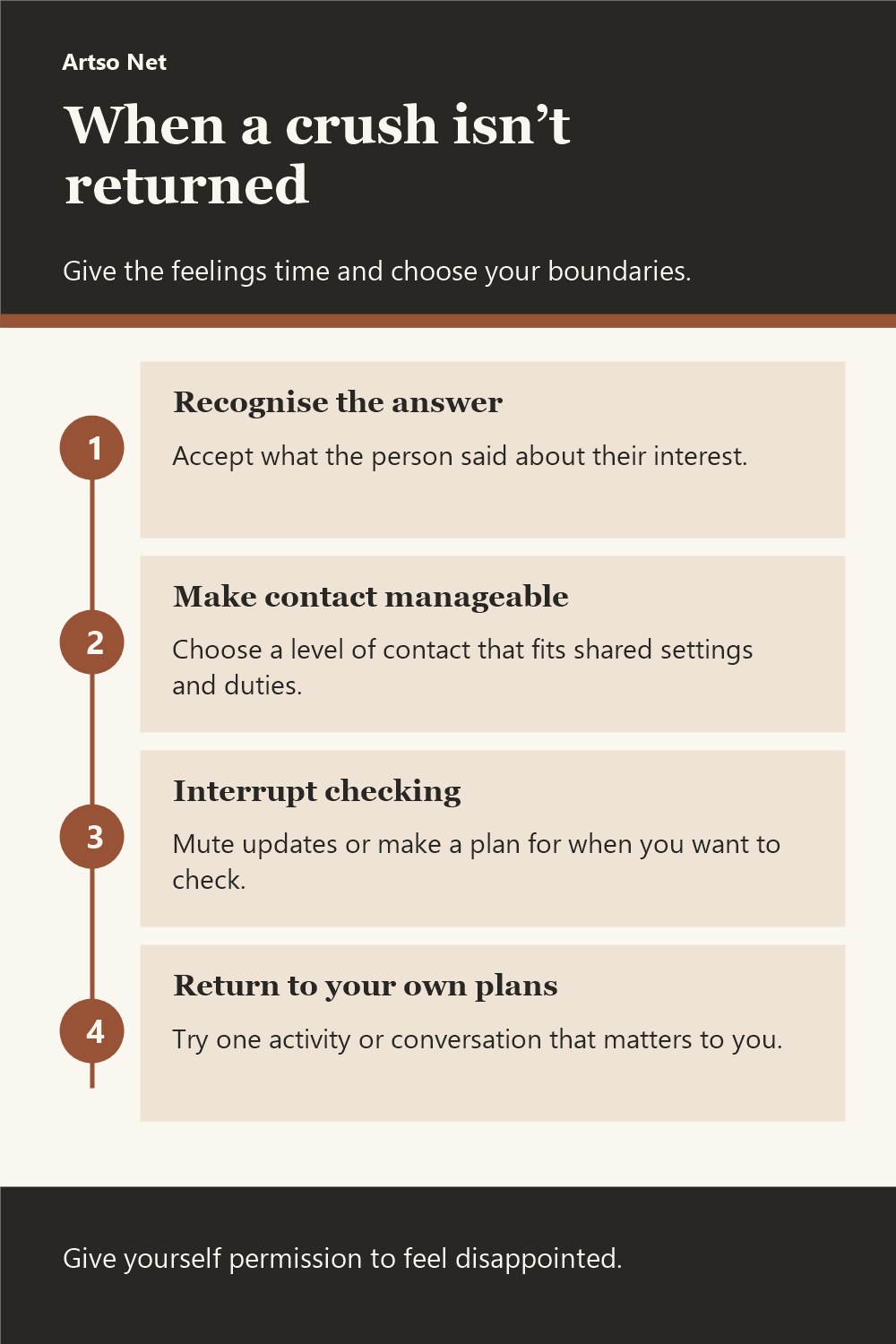
Read the infographic in text
When a crush isn’t returned Give the feelings time and choose your boundaries.
- Recognise the answer Accept what the person said about their interest.
- Make contact manageable Choose a level of contact that fits shared settings and duties.
- Interrupt checking Mute updates or make a plan for when you want to check.
- Return to your own plans Try one activity or conversation that matters to you.
Give yourself permission to feel disappointed.