

Emotional connection can mean feeling heard, understood and able to be yourself with another person. You may enjoy someone’s company or feel strongly attracted to them while still wondering whether you want the same relationship.
Meeting friends, spending money on dates or talking on the phone can be meaningful. None of those events tells you everything about another person’s feelings or intentions. Use what happens between you as a starting point for conversation rather than a test you must pass.
Describe the closeness you are looking for
Ask yourself what feels missing. Do you want more ordinary conversation, affection without an expectation of sex, shared plans or clarity about commitment? These are different needs and may call for different conversations.
Choose an example you can describe: “I enjoy being with you, and I would like some time together when we are not rushing.” That gives the other person something clearer to respond to than “We are not connected enough.”
You can want a different kind of relationship without proving that the current arrangement is wrong for everyone. Your preferences matter even if the other person is content with things as they are.
Notice listening and room for both people
Consider whether you can speak about something important without being mocked, dismissed or hurried into agreement. Does the other person ask questions and take an interest in your answer? Can you offer that attention too?
Listening does not require constant availability or immediate replies. Work, disability, caring responsibilities and communication preferences can affect how people stay in touch. Discuss a way of connecting that is manageable for both of you.
A voice call is one option, not a measure of sincerity. Text, signed communication, a quiet walk or an agreed time to talk may suit you better. Notice the care and understanding within the exchange.

Make shared time fit your real lives
You do not need expensive dates or a particular schedule to spend meaningful time together. A simple meal, an accessible outing or a shared interest can offer room to get to know each other.
If most contact happens on one person’s terms, suggest something specific that would work for you. Notice whether the response includes a genuine effort to find a workable alternative.
Being introduced to friends may feel welcoming, but it does not establish exclusivity or a future commitment. People vary in how quickly they mix their social lives. Discuss the meaning rather than assuming it.
Keep affection and sex freely chosen
Sexual attraction, affection and emotional closeness can overlap in different ways for different people. Gender does not tell you which experience someone is having. Ask what each of you wants without treating sex as a promise of commitment.
You should be able to decline or stop sexual activity without pressure, punishment or a demand to prove your feelings. Previous intimacy does not create an obligation to continue.
If you want time together without sex, say so directly. The useful question is whether your choice is respected, rather than whether you can persuade someone to show a particular kind of affection.
Ask about expectations and listen to the answer
Try a clear question: “I am interested in a committed relationship. What are you looking for with me?” You can also ask what exclusivity, privacy and keeping in touch would mean in practice.
Avoid relying on indirect clues when the answer affects your decisions. A warm date or an affectionate message can coexist with a wish for something casual.
If the response remains vague, you can name the uncertainty and decide what you are comfortable continuing. You do not have to agree to a strictly physical arrangement while hoping it will become something else.
Choose a next step you can actually take
Where there is mutual interest, agree one manageable change, such as a regular check-in or a plan that leaves room for conversation. Revisit whether it is helping both people rather than counting gestures as proof of love.
The existing guide to everyday ways to strengthen a relationship offers further ideas about listening, appreciation and shared time. Use the ideas that fit an arrangement you both freely choose.
If the relationship repeatedly leaves you dismissed or pressured, you can step back. Emotional connection is not something one person can create through enough patience, sex or effort on the other person’s behalf.
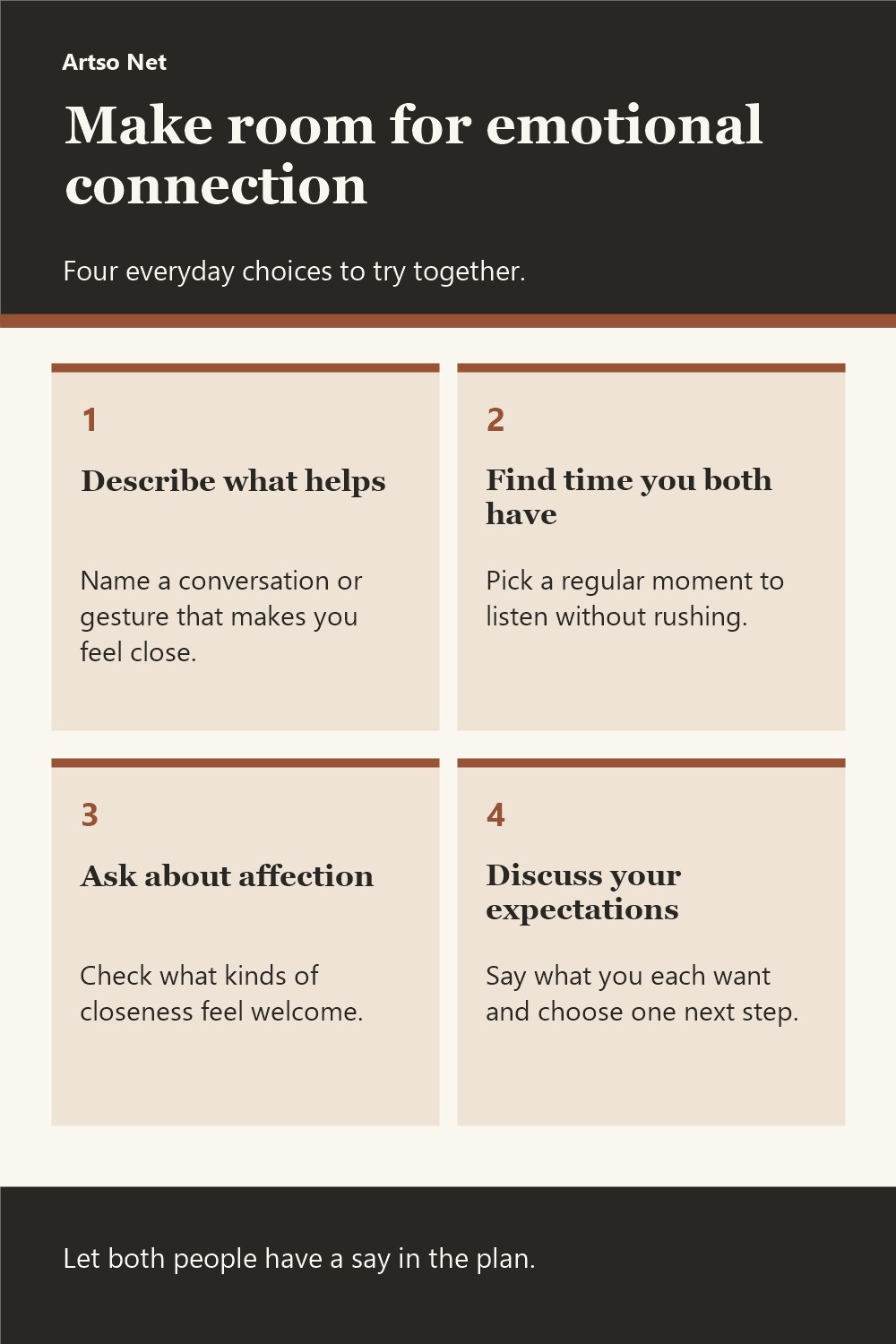
Read the infographic in text
Make room for emotional connection Four everyday choices to try together.
- Describe what helps Name a conversation or gesture that makes you feel close.
- Find time you both have Pick a regular moment to listen without rushing.
- Ask about affection Check what kinds of closeness feel welcome.
- Discuss your expectations Say what you each want and choose one next step.
Let both people have a say in the plan.