

A ritual can be a small, deliberate way to mark a change, a loss or an intention. You might give it spiritual meaning, connect it with your personal beliefs or simply use it as a pause in a busy day.
Difficult thoughts and feelings do not make you a negative person. You do not have to erase them before doing something helpful. Choose a practice that feels comfortable, and let it sit alongside the practical choices available to you.
Use water to mark a pause
Wash your hands as you normally would, noticing the water and the movement of your hands. You can quietly name an intention such as, “I want to give myself room to decide what comes next.”
If water symbolises cleansing or renewal in your beliefs, you can keep that meaning. Avoid making the practice a test of whether every difficult thought has disappeared.
Finish the ordinary task and return to your day. You can choose a different ritual if this one feels uncomfortable or does not suit your circumstances.
Make an earth ritual practical and contained
Use something already available, such as a small plant, an ordinary stone or a box on a shelf. Let it represent the part of your life you want to care for now.
You could write down one intention and keep the note in the box, or put away a reminder that you do not want in view. There is no need to bury belongings or leave materials outdoors.
Choose a meaning that fits your beliefs. You do not have to thank a painful experience or decide that it happened for a beneficial reason.
Choose an air ritual without scattering paper
Open a window if that is comfortable and safe, or sit somewhere you can pause without interruption. Notice the air around you and let your breathing stay gentle.
If you would like a structured exercise, the NHS breathing guide describes a comfortable approach without forcing the breath. You can stop a practice that does not feel comfortable.
You might say an intention aloud or keep it private. Paper and other materials can stay indoors rather than being scattered into the wind.
Mark an ending without fire
Write a short phrase about what you want to change: “I will stop rereading this conversation tonight,” or, “I want support with this decision.” Keep the wording about a choice you can make.
You can tear the paper and place it in recycling, fold it away or leave the page blank and simply speak your intention. A flame is not needed to make the moment meaningful.
If a note contains private information, consider who could find it before choosing where to keep or dispose of it.
Use a symbolic cord-cutting gesture
If this image has meaning for you, make a small scissors-like gesture with your fingers or open your palms as you name a boundary. You can also skip the gesture and say the intention in words.
Keep the intention about your own choices: how much optional contact you want, where you place your attention or what support you will seek. A symbolic act does not make another person change their feelings or behaviour.
Feeling sad or thinking about the person again does not mean you performed the ritual incorrectly. A boundary may need practical support and repeated decisions in daily life.

Follow the ritual with one practical action
Choose something manageable: eat a meal, put a reminder out of view, make an appointment, ask a trusted person for company or write down a question for a conversation.
If the situation involves threats or control, prioritise individual support and a safer plan. You do not need a symbolic ending before asking for help or making a practical boundary.
A ritual can mark an intention without resolving every feeling. If distress is persistent or making everyday life difficult, consider speaking with a qualified healthcare or mental health professional. You can keep what is meaningful in your beliefs while seeking support with what is happening.
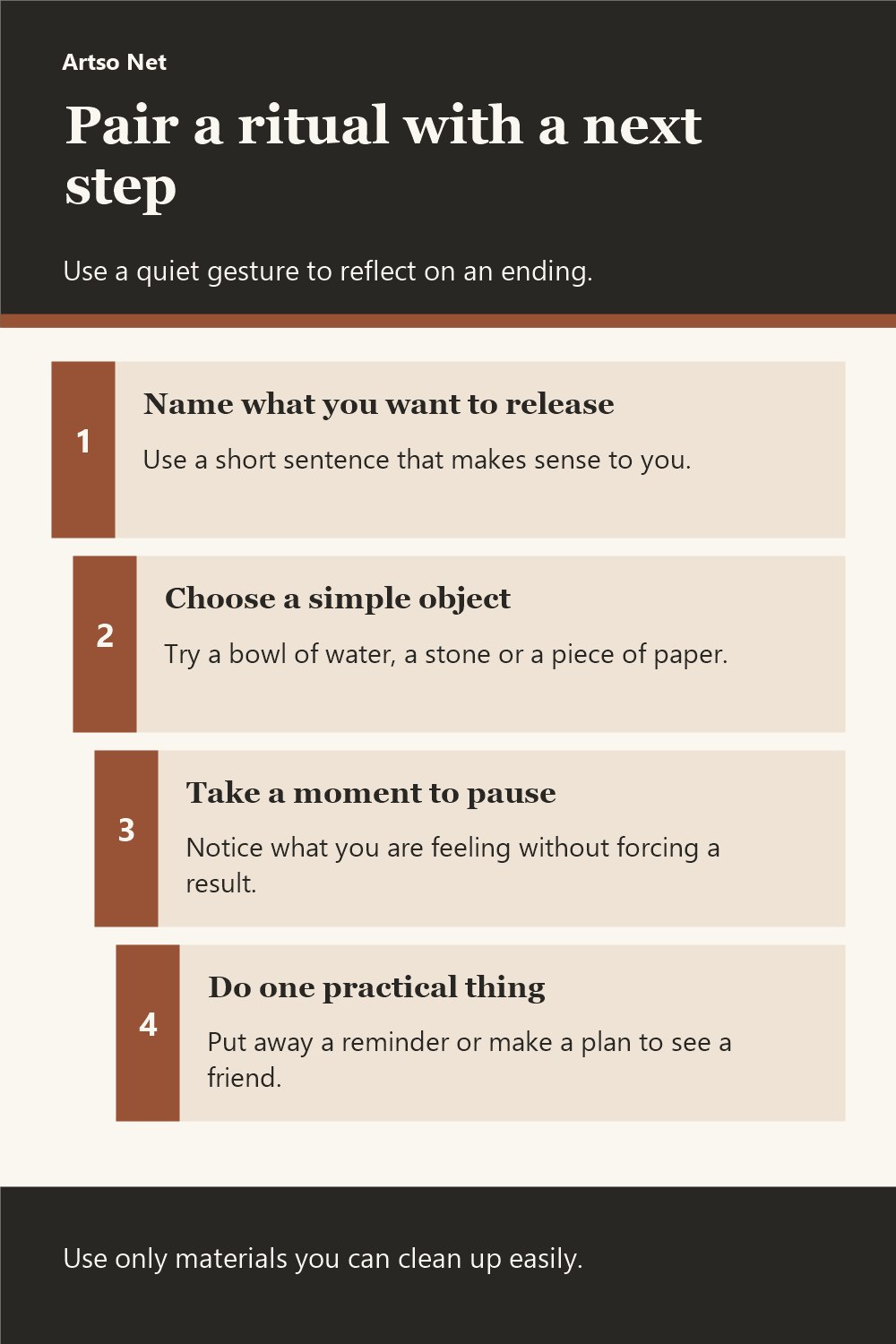
Read the infographic in text
Pair a ritual with a next step Use a quiet gesture to reflect on an ending.
- Name what you want to release Use a short sentence that makes sense to you.
- Choose a simple object Try a bowl of water, a stone or a piece of paper.
- Take a moment to pause Notice what you are feeling without forcing a result.
- Do one practical thing Put away a reminder or make a plan to see a friend.
Use only materials you can clean up easily.