

When someone is affectionate but uncertain about commitment, it is easy to search for evidence that they secretly want the same future you do. Affection, hesitation and future plans can coexist in many ways. None of them tells you what another person will eventually choose.
You can ask what they want, explain what you need and decide which arrangements you are willing to continue. You do not have to resolve their fears, become more persuasive or wait for a promised version of the relationship before making choices about your own life.
On this page
Define the commitment you want
“Commitment” might mean dating exclusively, making plans reliably, introducing one another as partners, living together or considering marriage. Before asking for it, identify the decision you are actually trying to make. Wanting exclusivity is a different conversation from wanting a wedding date.
Consider what you need now and what you hope for later. You might be comfortable getting to know someone gradually while still needing an honest answer about whether they want a relationship. You can enjoy time together and recognize that the available arrangement leaves you uncertain.
A different preference does not automatically make either person immature. Someone who does not want marriage may be clear about that choice. The practical question is whether there is a relationship both of you want, rather than which person can convince the other to adopt their plan.

Ask about the present
Choose a calm time and ask directly: “I would like us to date exclusively. Is that something you want too?” Give them room to answer, including with an answer you do not hope to hear. Reassure them that you want clarity, while being honest that the answer matters to your choices.
If they describe fear or uncertainty, ask what they are willing to offer now. “I care about you, but I don’t want a relationship” is still information you can use. It does not create a task in which you must prove that a relationship with you would be different.
You may hear about a difficult past, family expectations or competing priorities. Listen without deciding that those explanations guarantee future commitment. Understanding someone’s experience can help you communicate; it cannot establish a decision they have not made.
Notice agreements in practice
Compare what has actually been agreed with what happens. If you agree to plan weekends together, do both of you contribute? If one person cancels, can you discuss the effect and make a different arrangement? Focus on the particular agreement rather than collecting signs of hidden love.
Meeting friends, leaving clothes at one another’s homes or having an affectionate evening may matter to you. Ask what those experiences mean to each person. They do not, on their own, establish exclusivity, a shared home or a promise to marry.
Leave room for separate interests and responsibilities. You do not need to be someone’s only priority to matter to them. At the same time, recurring broken agreements deserve attention even when the explanation sounds understandable.
Choose your own limits
Decide what you can continue without quietly abandoning your own wishes. You might say, “I don’t want to keep dating casually, so I will step back if that is the arrangement you want.” This explains your choice without demanding that the other person change theirs.
If you both want time to think, agree on when to revisit the conversation. Choose a point that makes sense for the decision involved, rather than using a universal number of days. You can revise your own decision if waiting becomes unworkable.
Love is respect’s guidance on emotional boundaries offers questions about consistent actions and mutual support. They can help you reflect on the relationship you have now, without predicting its future.
Make a workable next step
If you agree on a direction, make the next action clear: arrange another conversation, confirm an agreement about dating, or discuss one practical plan. Shared participation gives you more information than another vague assurance that everything will work out eventually.
If your wishes differ, you can take distance or end the relationship without proving that the affection was false. Keep supportive people and ordinary routines in view while you adjust. Feeling disappointed does not mean you should have persuaded harder.
If raising your wishes brings threats, intimidation or pressure to give up control over your choices, seek private support before planning another confrontation. A conversation about commitment should leave room for either person to say no and make decisions safely.
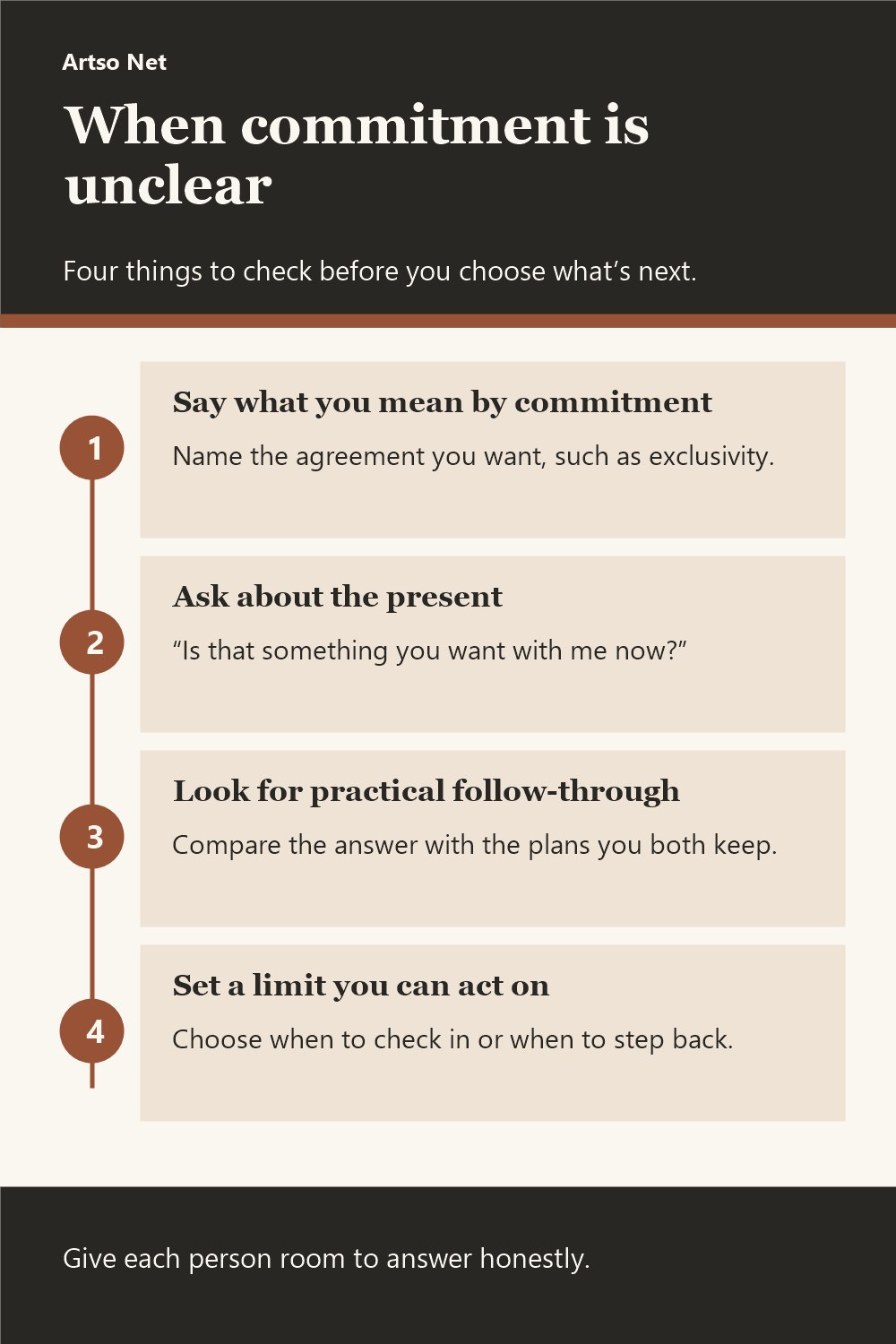
Read the infographic in text
When commitment is unclear Four things to check before you choose what’s next.
- Say what you mean by commitment Name the agreement you want, such as exclusivity.
- Ask about the present “Is that something you want with me now?”
- Look for practical follow-through Compare the answer with the plans you both keep.
- Set a limit you can act on Choose when to check in or when to step back.
Give each person room to answer honestly.