

When someone becomes distant after sex, it can leave you wondering what changed and whether you did something wrong. A quieter conversation or a missed plan does not reveal the whole explanation. You do not need to fill the gap with a verdict on your worth.
Start with what you can observe, what you want to understand and what you are comfortable doing next. You can invite an honest conversation without taking responsibility for making the other person interested or persuading them to continue.
Separate the change you noticed from the explanation
Describe what happened: messages became less frequent, a plan was cancelled or the person stopped initiating contact. Keep that separate from an assumption such as “They only wanted sex” or “I ruined the connection.”
Different expectations, uncertainty or a change of interest are possible explanations, but you cannot know which applies without an honest answer. Broad claims about how men or women think will not establish what happened between two particular people.
You can notice a pattern without diagnosing the person or proving their motive. Repeated avoidance may give you enough information to decide what you want to participate in.

Ask once in a clear, manageable way
If you want to talk and feel safe doing so, try: “I noticed we have been less in touch since we slept together. I would like to understand whether you want to keep seeing each other.”
Choose a way of communicating that suits the situation. You do not have to meet privately or have sex again to make the conversation possible.
Allow room for an answer while keeping your own needs visible. You can ask for clarity without apologising for caring, sending a long defence of yourself or promising to become easier to date.
Compare what you each want now
One person may want a casual connection while the other wants a committed relationship. Say what you want rather than pretending you are comfortable with an arrangement you hope will change.
Sex does not itself establish exclusivity, a relationship label or a promise of future contact. Those expectations need discussion. It is still reasonable to expect respectful treatment and an honest response about continued interest.
If the other person says they do not want to continue, take that answer seriously. You can feel disappointed and choose distance without trying to make a case for why they should feel differently.
Keep any further intimacy freely chosen
You do not owe another sexual encounter to demonstrate confidence, improve compatibility or win back attention. The other person does not owe one either. A previous yes does not remove either person’s right to say no or change their mind.
If you both want to continue, you can talk about comfort, preferences and boundaries without blaming anyone for an awkward or disappointing experience. Go only as far as each person freely wants.
Pressure, guilt or a threat to withdraw affection is a reason to pause and consider support. Your decisions about your body do not need to be negotiated in exchange for care.
Decide what you will do with an unclear response
You might decide to allow some time, send one follow-up or stop pursuing an answer. Choose an approach you can live with rather than waiting for a perfect explanation before setting a limit.
For example: “I am looking for consistent contact and a clear plan to see each other. If that is not what you want, I will step back.” A boundary describes your choice; it is not a technique for provoking pursuit.
If you keep checking messages, consider muting the conversation for a while and returning to another part of your day. You can make that small change even while the feelings remain unsettled.
Give your own feelings care and perspective
Disappointment after intimacy does not make you foolish, too attached or responsible for another person’s choices. Speak with someone who can listen without shaming you, and make room for rest, familiar routines and company you enjoy.
If the experience has turned into harsh conclusions about yourself, the guide to building self-esteem with balanced thoughts and boundaries offers practical reflection ideas. You do not need to become more desirable to deserve respect.
Look at the relationship you would actually be returning to: how you communicate, whether boundaries are respected and whether your wishes fit. Your next step can be a conversation, a pause or an ending. None requires a guarantee about what the other person will do.
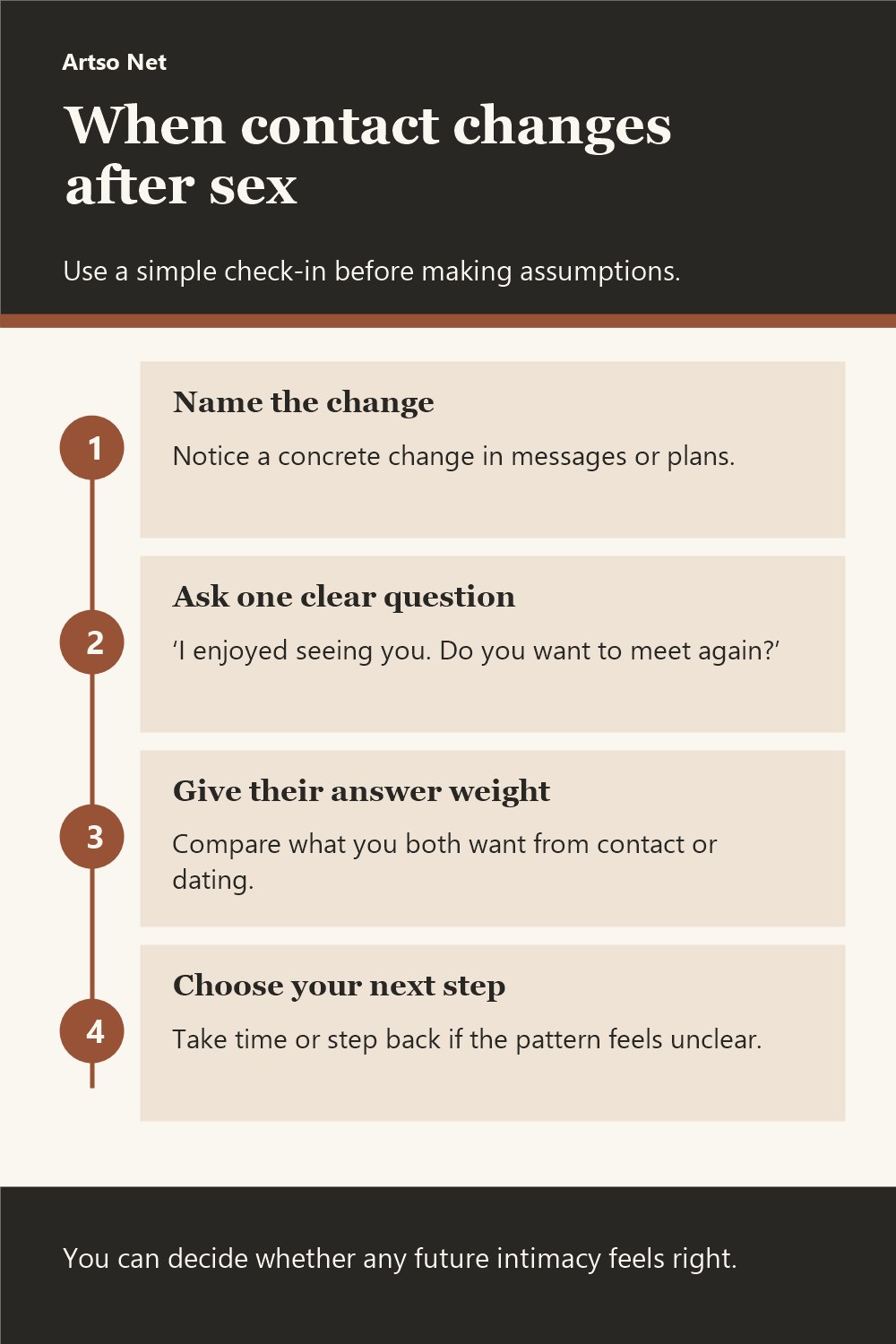
Read the infographic in text
When contact changes after sex Use a simple check-in before making assumptions.
- Name the change Notice a concrete change in messages or plans.
- Ask one clear question ‘I enjoyed seeing you. Do you want to meet again?’
- Give their answer weight Compare what you both want from contact or dating.
- Choose your next step Take time or step back if the pattern feels unclear.
You can decide whether any future intimacy feels right.