

Missing an ex does not tell you whether getting back together would be good for either of you. You may miss the person, the routines you shared, the future you imagined or the comfort of being partnered.
Reconciliation is a possibility only when both people freely want to explore it. There is no message, period of silence or performance of confidence that can guarantee someone will return. Start with the breakup as it stands and the choices you can make now.
Respect the breakup and any request for space
If your ex has asked for no contact, respect that request. Do not use new accounts, mutual friends or surprise visits to get around it. Silence is not an invitation to keep trying.
Where practical contact is necessary, such as arranging belongings or shared responsibilities, keep it focused on the task. Agree a suitable channel if that is possible and safe.
Time apart can help you decide what you want. It should not be a tactic intended to make someone anxious, jealous or afraid of losing access to you.
Ask what you want to return to
Write down what you miss and what was difficult. Include ordinary patterns as well as meaningful moments: communication, reliability, affection, disagreements and plans for the future.
Ask whether you want this particular relationship or relief from the pain of its ending. Both feelings can exist together, and neither requires an immediate decision.
You can value what the relationship meant while recognising that some needs were not being met. Feeling lonely does not obligate you to restart a relationship, and feeling sad does not prove the breakup was a mistake.

Look for changes that address what ended it
Name the difficulty plainly. “We will try harder” is less useful than discussing the actual pattern, such as repeated cancellations, a broken agreement or incompatible plans about where to live.
Consider what has changed in behaviour or circumstances. An apology can matter, but it does not by itself resolve a recurring problem. Ask what each person is willing and able to do differently.
Some differences may remain. Neither person should have to promise a future, commitment or lifestyle they do not want just to make reconciliation possible.
Talk honestly if you both want to reconnect
If contact is welcome and neither person has asked for space, you may choose to ask once whether they would like to talk. Make room for a refusal and avoid treating a friendly reply as agreement to date again.
If you meet, be clear about the purpose. A relaxed setting can help, but avoiding every difficult subject will not tell you whether the relationship could work differently.
You might ask, “What would need to change for you?” and “What are you hoping this conversation leads to?” Listen to the answer you receive rather than the one you hope will follow later.
Agree what trying again would mean
Discuss expectations before assuming you are a couple again. What contact feels comfortable? Are you dating exclusively? How will you handle the issue that led to the breakup?
Choose a pace that suits both people. Neither person has to follow the other’s pace automatically, and physical closeness does not settle questions about commitment.
Allow room to reconsider. A shared decision to try again can include checking in about how things are going. It is not a contract to stay regardless of what happens.
Leave room for a different ending
Your ex may not want to return, or you may decide that returning is not right for you. That answer can hurt without being a judgment on your worth.
Keep support and everyday life alongside reflection: see someone you trust, keep a manageable routine and make practical plans that do not depend on reconciliation. The guide to finding closure after a breakup offers ways to move forward when questions remain.
If the relationship involved threats, control or abuse, seek specialist support before considering renewed contact. The National Domestic Violence Hotline’s safety-planning resources can help readers in the United States explore options. You do not owe someone another relationship to show that you care.
Read the infographic in text
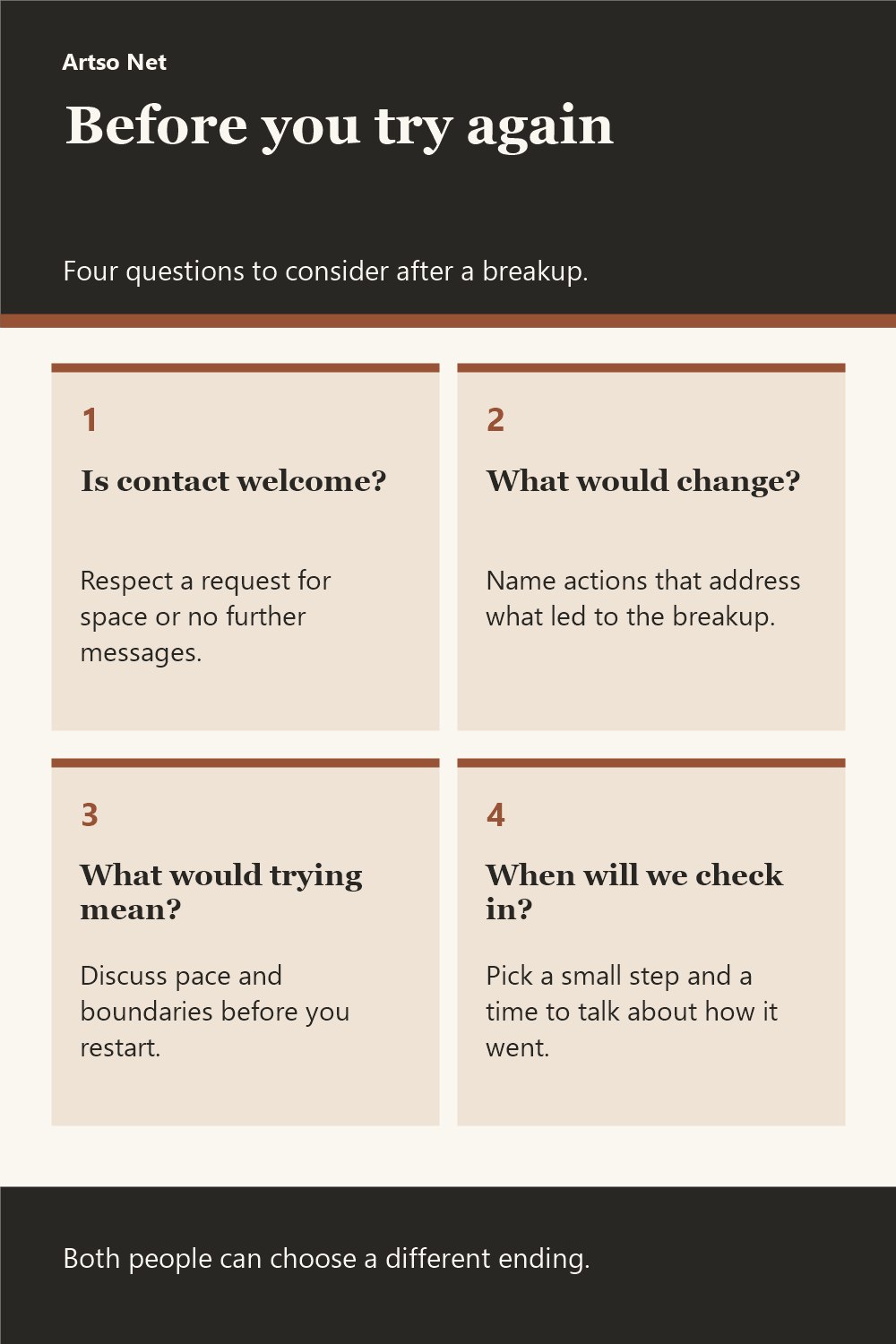
Before you try again Four questions to consider after a breakup.
- Is contact welcome? Respect a request for space or no further messages.
- What would change? Name actions that address what led to the breakup.
- What would trying mean? Discuss pace and boundaries before you restart.
- When will we check in? Pick a small step and a time to talk about how it went.
Both people can choose a different ending.