

Wanting a committed relationship while your partner wants something different can leave you waiting for the next conversation, invitation or promise. You may care about each other and still disagree about exclusivity, future plans or how much of your lives to share.
You can explain what you want and decide what works for you. Becoming more agreeable, less demanding or more useful to someone cannot secure their commitment. A clearer conversation helps you understand the choices available now.
In this article
Name the commitment you want
“Taking things further” can mean different things. You might want to stop dating other people, introduce each other as partners, discuss living together or make plans beyond the next weekend. Your partner may understand the phrase differently.
Write down the actual agreement you would like. For example: “I want us to be exclusive, including on dating apps.” That gives you something concrete to discuss. It also helps distinguish a present need from a future possibility you are curious about.
Consider what you can offer as well. A shared home, regular visits or more contact brings practical questions about time, money, care and responsibilities. An agreement needs to be workable for both people rather than simply sounding romantic.
You do not have to minimise your hopes to seem easygoing. Equally, wanting marriage or exclusivity does not mean another person must want it with you. Both preferences deserve a clear answer.
Ask a question that allows an honest answer
Choose a time when you can talk without trying to finish another task. Explain your position plainly: “I enjoy being with you, and I am looking for an exclusive relationship. Is that something you want with me?”
Listen to the answer without turning the conversation into a case for why you are a good partner. You do not need to prove you are attractive, independent or accepting enough to be chosen. Their answer concerns their willingness, not a score of your worth.
If the answer is unclear, ask what it means in practice. “I need time” might mean they want another conversation, do not know what they want or are declining the agreement. You can ask, “What would you like to decide, and when shall we check in?”
How to Ask for a Committed Relationship: Clear Words and Mutual Choice offers more ideas for stating a request without making the other person’s answer your responsibility.
Consider agreements alongside everyday behaviour
Affection, gifts, sex and saying “I love you” can matter deeply, but they do not define the relationship on their own. Ask about the agreement you need rather than treating a warm moment as a promise that has not been discussed.
Notice whether agreed plans happen and whether changes are communicated. If you agree to exclusivity but a partner says the agreement does not apply when they travel, that difference needs addressing. You can describe it specifically rather than guessing their hidden motives.
Someone may find commitment difficult for reasons they do not want to discuss. You can respect their privacy without diagnosing them or accepting an arrangement that hurts you. A past experience does not give either person permission to mislead the other.
Love is respect’s guidance on emotional boundaries explains that trust develops through consistency and cannot be demanded. Reassuring words and respectful behaviour both matter.
Keep a life that supports you
Stay connected with people and activities you value where you can. You might protect a weekly call, continue a course or leave time for rest. These things support your life whether or not this relationship becomes more committed.
Spending time apart does not need to be a strategy to make someone miss you. Getting along with their friends does not require tolerating disrespect, and supporting their ambitions does not mean hiding your own needs.
Personal Space in a Relationship: Time, Responsibilities and Respect considers independence alongside the everyday commitments people share. Needing help or having limited resources does not make you a burden or a less deserving partner.
Choose what to do with a mismatch
If your partner does not want the relationship you want, you can be disappointed without trying to change their answer. Consider whether the current arrangement is something you freely want to continue.
You might agree on a specific time to revisit an unresolved question, continue with different expectations if that suits you, or end the relationship. You do not have to wait indefinitely because someone might eventually feel differently.
A boundary describes your choice: “An exclusive relationship matters to me, so I am stepping away from casual dating.” It does not require threats, jealousy tactics or making another person chase you.
If conversations bring intimidation, threats or pressure, prioritise support and a safer way to make decisions. Otherwise, the aim is an honest understanding of what each of you wants, even when that understanding is painful.
Read the infographic in text
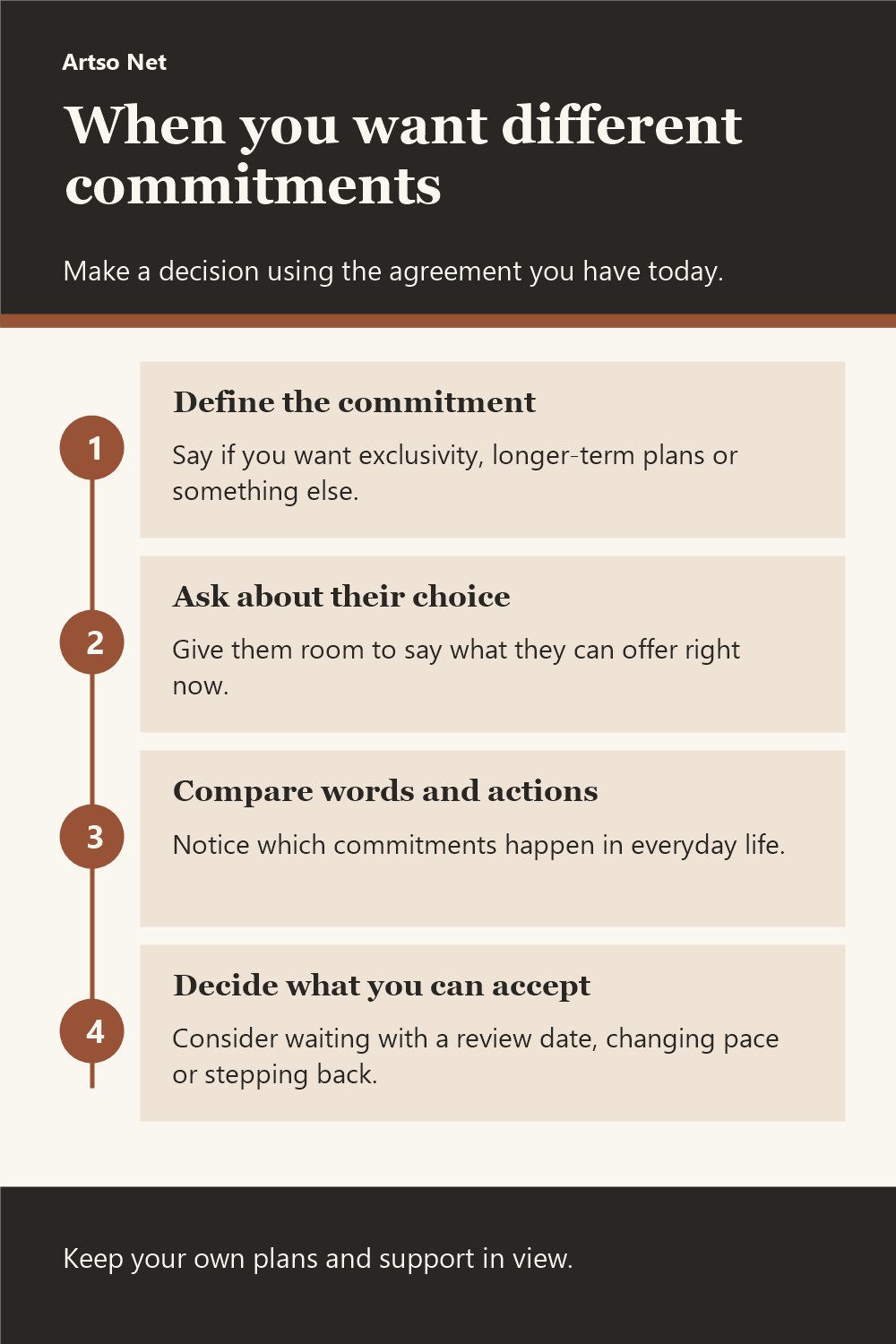
When you want different commitments Make a decision using the agreement you have today.
- Define the commitment Say if you want exclusivity, longer-term plans or something else.
- Ask about their choice Give them room to say what they can offer right now.
- Compare words and actions Notice which commitments happen in everyday life.
- Decide what you can accept Consider waiting with a review date, changing pace or stepping back.
Keep your own plans and support in view.