

When someone ends a relationship, you may still love them, miss the life you shared or hope they will reconsider. Those feelings can exist alongside a clear decision to stop pursuing a partnership that the other person no longer wants.
Moving forward does not mean proving you never cared. Start by understanding what has been said, choosing how to handle necessary contact and making room for your own support. You do not have to feel ready for another relationship.
Separate a clear ending from uncertainty
Begin with the information you actually have. “I do not want to continue this relationship” is different from a request for a little time alone after an argument. A quiet day or an unanswered message, by itself, cannot tell you everything about someone’s intentions.
If the situation is unclear and contact is welcome and safe, one direct question may help: “Are you ending our relationship, or asking for time before we talk?” Listen to the answer without turning the conversation into a case they must disprove.
You might not receive the explanation you want. You can still decide how long you are willing to remain in an uncertain arrangement and what kind of contact you will accept.
Respect the answer without dismissing your feelings
A relationship requires people who freely choose to participate. Repeated messages, surprise visits or asking friends to persuade an ex can cross their boundaries and keep you waiting for a response you cannot control.
Where a reply is appropriate, it can be brief: “I am sad about this, but I understand that you do not want to continue. I will respect your decision.” You do not need to agree with their reasons or pretend the separation is easy.
Write the message you wish you could send in a private note instead of sending it immediately. Give yourself time to decide whether it serves a practical purpose or mainly asks them to relieve your hurt.
Make contact fit your actual responsibilities
There is no single contact rule that suits every separation. A break from personal messages may help some people; shared parenting, belongings, housing or work may require continuing communication.
- Choose a channel and topic for necessary arrangements.
- Keep practical requests specific, such as a proposed time to return belongings.
- Ask mutual friends not to pass along personal updates if those updates upset you.
- Consider muting social updates rather than repeatedly checking for signs of regret.
Where threats, stalking or controlling behaviour are present, ordinary breakup scripts may be unsafe. A specialist advocate can help you consider a personal safety plan for your circumstances. Seek urgent local help if danger is immediate.
Give the loss a place in your day
You may miss both the person and the future you imagined. Feeling better for an afternoon and sad again later does not mean you have undone your progress. You do not need to compare your pace with an ex’s social media or a friend’s expectations.
Choose a few manageable supports: regular meals, a familiar bedtime, a walk you enjoy or a conversation with someone who can listen. Be concrete when asking for company: “Could we have dinner on Thursday? I would like a little time with a friend.”
If distress is persistent, overwhelming or interfering with daily life, consider qualified mental-health support. You can ask for help before you know exactly what to say.
Reflect without turning rejection into a verdict
Learning from a relationship is different from deciding that everything was your fault. You can acknowledge a mistake you made without taking responsibility for another person’s dishonesty, cruelty or decision to leave.
Try three short notes: what mattered to you, what you would handle differently and what you want to recognise earlier next time. Keep the observations specific. “I want to ask about commitment sooner” is more useful than “I am impossible to love.”
A relationship ending does not establish your worth or guarantee anything about your next relationship. It gives you information about a partnership that could not continue in its current form.
Choose one next step that belongs to you
For the coming week, choose one contact boundary, one supportive person or activity and one practical task. That might mean keeping messages to arrangements, accepting a friend’s invitation and sorting a shared subscription.
Leave room for ordinary interests that have nothing to do with being chosen. You can enjoy a good meal, a book or a quiet evening while still feeling sad.
Dating again is optional. If you decide to try it, choose a pace that lets you notice your own interest and comfort. Moving forward can begin with a more manageable day, rather than a new romance.
Read the infographic in text
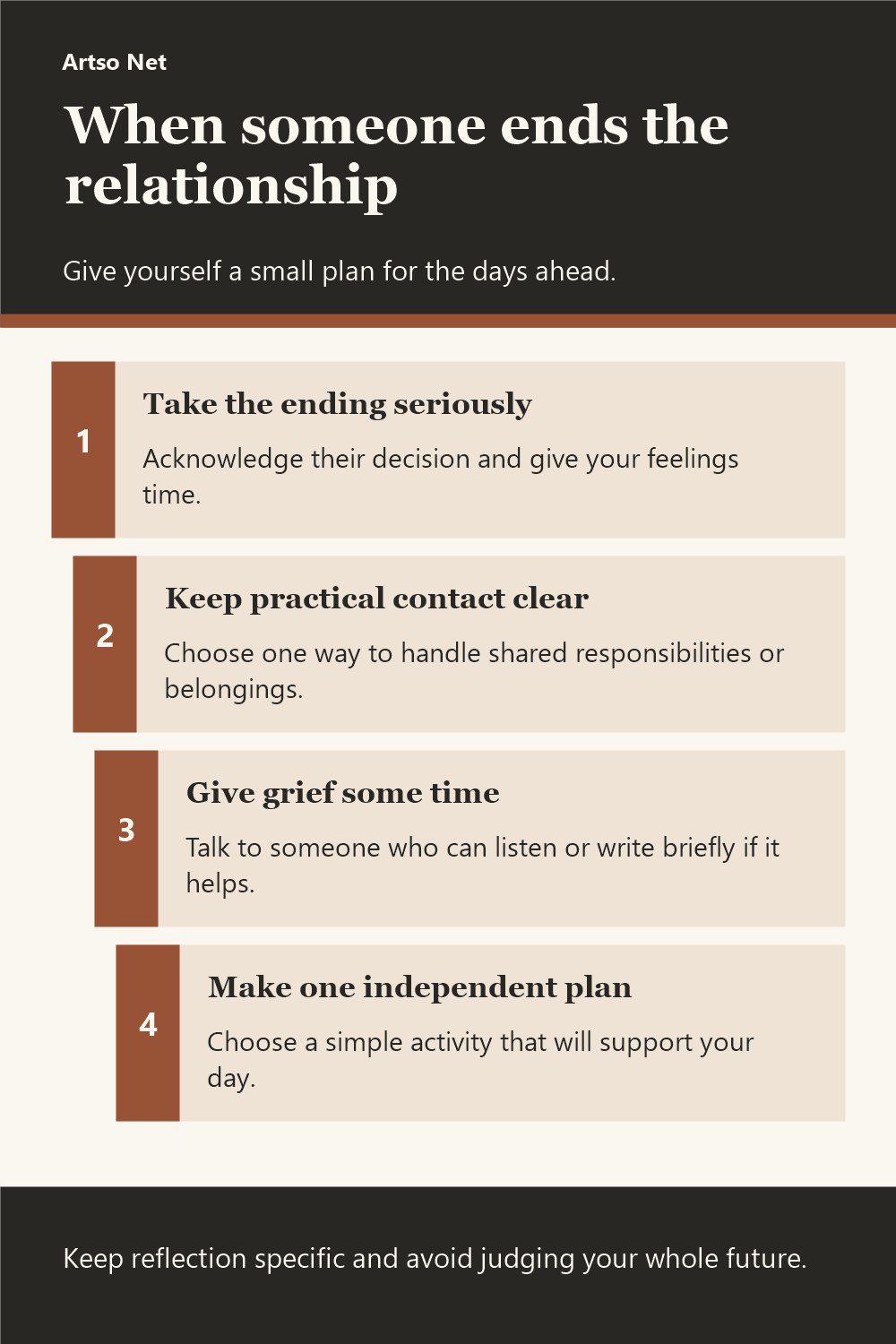
When someone ends the relationship Give yourself a small plan for the days ahead.
- Take the ending seriously Acknowledge their decision and give your feelings time.
- Keep practical contact clear Choose one way to handle shared responsibilities or belongings.
- Give grief some time Talk to someone who can listen or write briefly if it helps.
- Make one independent plan Choose a simple activity that will support your day.
Keep reflection specific and avoid judging your whole future.