

Developing romantic feelings for a friend can be exciting and unsettling. You may value the friendship, wonder whether the attraction is mutual and worry about what a conversation could change. There is no sequence of signs that can settle those questions for both of you.
You can take your feelings seriously while leaving your friend free to want something different. A useful next step is to work out what you want to ask, whether the circumstances allow a freely chosen answer and how you would respond to either answer.
On this page
1. Understand your own feelings
Consider what has changed. Are you curious about dating this person, drawn to physical closeness or looking for reassurance during a lonely period? More than one feeling can be present. You do not need a perfect explanation, but naming your interest helps you make a clearer invitation.
Attraction belongs to the person feeling it
Imagining a kiss or a relationship tells you something about your wishes. It does not establish your friend’s wishes or make a romantic relationship the inevitable next stage of the friendship. Ask yourself whether you want to get to know them as a partner, including differences you have not had to negotiate as friends.
Closeness can remain friendship
Shared jokes, understanding and loyalty can matter deeply without becoming romance. Friends do not owe one another a different kind of relationship because they have been close for years. Try to separate appreciation for what you already share from hopes about what might happen next.
2. Check what the signals can tell you
Flirting may be an opening for a conversation, but its meaning varies. Someone can enjoy playful conversation without wanting a date. You also may interpret familiar behavior differently once your own feelings change.
Messages and time together
Frequent messages can reflect friendship, habit or romantic interest. Look at what has actually been said instead of treating the number of texts as an answer. A slow reply or a busy week does not, by itself, settle the question either.
Nicknames and private jokes
A nickname can feel intimate and still mean different things to each person. You can enjoy the warmth without building a whole relationship agreement around one word. Friends’ guesses and teasing are also guesses.
Body language and touch
Eye contact, sitting nearby or a hug do not substitute for consent. Ask before introducing unfamiliar physical affection, and respect hesitation or a refusal. Avoid testing attraction with an unexpected kiss or by making someone jealous.
3. Ask without pressure
If you decide to talk, choose a private but comfortable setting where either person can end the conversation. Avoid a public declaration, intoxication or a moment when your friend depends on you for a lift, accommodation or another immediate need.
A simple invitation might be: “I’ve started to feel interested in dating you. Would you like to go on a date? It’s okay if you don’t feel the same.” You can adapt the words to sound like yourself. Keep the question clear enough that they do not have to decipher a hint.
Leave room to answer honestly
Listen without presenting a case for why you belong together. Do not recruit mutual friends to persuade them. If they ask for time, agree whether they want to return to the conversation; you can also decide how long uncertainty feels manageable for you.
4. Choose a pace together
If you both want to try dating, start with an arrangement you actually agree on. A first date does not automatically establish exclusivity, physical intimacy or a commitment. Talk about what you would like, what feels premature and what you want shared with other people.
Keep room for the rest of your lives
You can enjoy more contact while keeping other friendships, responsibilities and time alone. Being available all day is not a requirement for proving interest. Check whether the pace works for both of you rather than treating constant communication as the goal.
Jealousy needs a respectful response
Jealous feelings do not establish love or give either person authority over the other’s contacts. Discuss any exclusivity you want directly. Monitoring messages, demanding passwords or punishing someone for seeing friends is a reason to take the behavior seriously, not a romantic milestone.
5. Make room for a different answer
If your friend declines, accept the answer without bargaining or repeatedly asking. Disappointment can take time. You may need a little distance, and they may need space too. Explain your own contact needs without using withdrawal as a threat intended to change their mind.
The friendship may continue, change or end; neither person can promise the outcome in advance. You can respond with care and still acknowledge your feelings. A worthwhile conversation gives both people a choice, including the choice to remain friends.
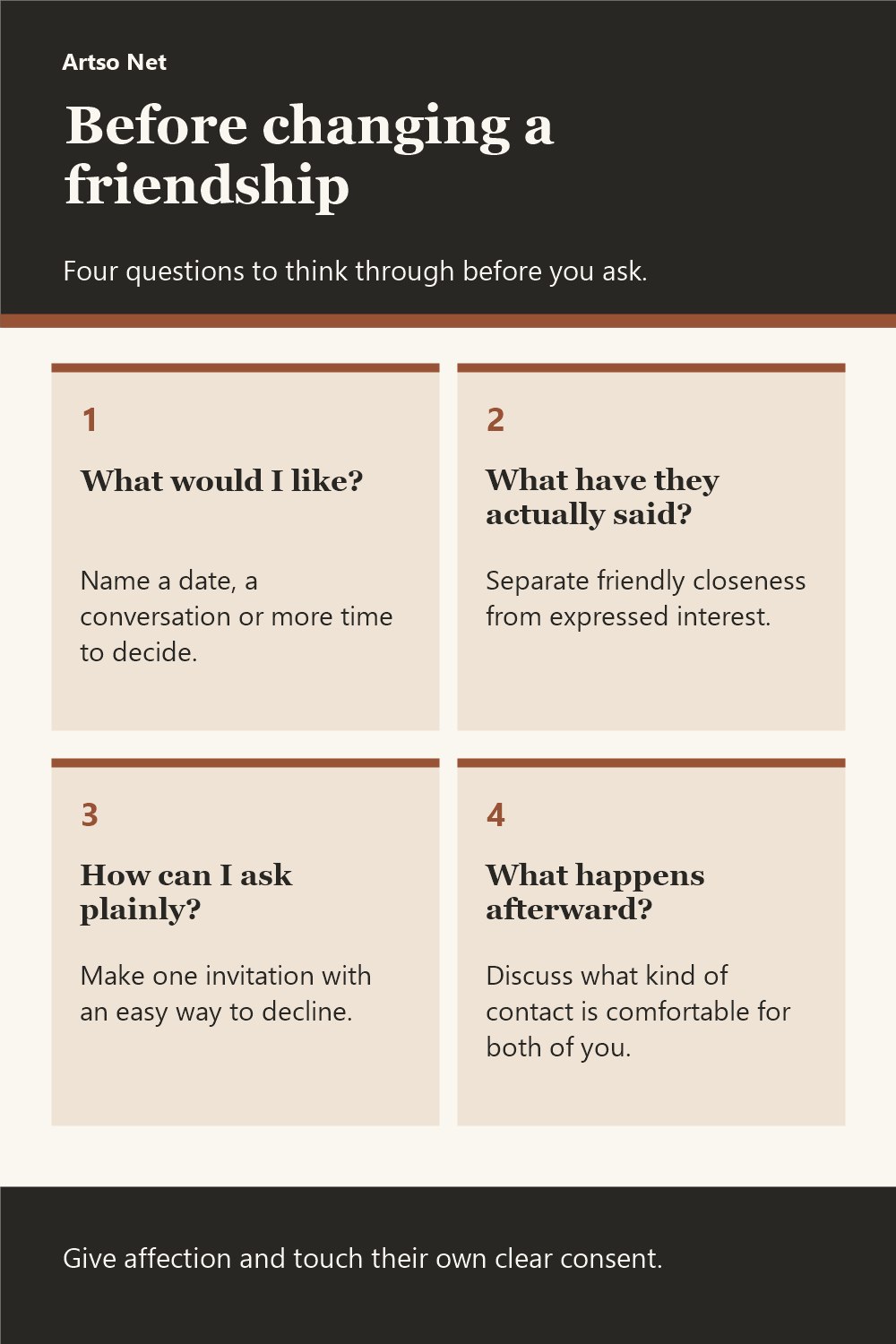
Read the infographic in text
Before changing a friendship Four questions to think through before you ask.
- What would I like? Name a date, a conversation or more time to decide.
- What have they actually said? Separate friendly closeness from expressed interest.
- How can I ask plainly? Make one invitation with an easy way to decline.
- What happens afterward? Discuss what kind of contact is comfortable for both of you.
Give affection and touch their own clear consent.