

Casual dating can mean meeting without plans for a long-term partnership, dating more than one person or taking time to learn what you want. Those meanings are not interchangeable. The useful starting point is a conversation about what each of you is choosing.
A casual arrangement can include affection, enjoyable dates and consideration. It does not make anyone less deserving of respect. It also does not become a committed partnership simply because one person hopes that more time together will change the agreement.
Agree what casual dating means
Ask directly: “What are you looking for at the moment?” Then explain your own hopes. If someone says they do not want a serious relationship, take that as their current answer rather than treating it as a challenge.
Friendship, casual dating and a sexual relationship are different possibilities. Check which one you both mean. You can decline an arrangement that does not suit you without making either person wrong for wanting something else.
Discuss privacy and introductions
Meeting family or friends does not prove commitment, and not meeting them does not establish someone’s motives. People have different family circumstances, cultures and preferences about privacy.
Discuss what you want to share with others and how you would introduce one another. Ask before posting a photograph or relationship detail. Privacy should be an agreement you can discuss, rather than a reason one person is expected to accept secrecy that troubles them.
Talk about exclusivity and changing feelings
Do not assume that casual means non-exclusive or that frequent contact means exclusive. Ask whether either of you is dating other people and what information you need to make your own choices.
Feelings can change. You can say, “I am becoming more attached, and I would like to know whether you want the same thing.” The other person may not. An honest answer lets you decide whether continuing feels workable; it does not require either person to promise feelings they do not have.
Find a workable communication rhythm
Discuss how you usually make plans and communicate between meetings. One person may enjoy daily messages; another may prefer less frequent contact. Neither preference tells you, by itself, how much someone cares.
You can ask for a reply to a practical question by a particular time without expecting constant availability. If a pattern repeatedly leaves you anxious or unable to plan, explain the effect and consider whether the arrangement suits you.
Choose activities and intimacy freely
Suggest things you both enjoy and can comfortably afford. A walk, meal or activity can be meaningful without implying a future commitment. Paying for a date does not buy affection, access or another meeting.
You can decline an activity or change your mind, including about sex. If sex is part of your dating, discuss consent, protection and testing beforehand. A qualified sexual health service can help with personal questions; the NHS guide to visiting a sexual health clinic explains the support those clinics offer.
Make plans you can rely on
Keeping things casual does not make another person’s time unimportant. Agree enough detail to know when and where you are meeting, and communicate changes as soon as you reasonably can.
A cancellation may have an ordinary explanation. Repeatedly cancelling without consideration can still make an arrangement unsuitable for you. You can respond to its effect on your life without having to prove what it reveals about someone’s hidden intentions.
Keep your own life and shared choices
You can enjoy being together while keeping friends, interests and time to yourself. Using “I” rather than “we” is not a reliable test of commitment. Look instead at the agreements you have made and how you treat one another.
Notice whether you are setting aside things you value to remain constantly available. Keep plans that matter to you, and be honest about what time and attention you can offer.
Set boundaries around spontaneous invitations
A last-minute invitation can be enjoyable when it suits both people. It can also be inconvenient. You do not need to accept it to demonstrate interest.
Try a practical response: “I cannot meet tonight. Would you like to plan something for Saturday?” If advance planning is important to you, say so. The question is whether your preferences can work together, rather than whether every invitation follows a particular dating rule.
Expect kindness and respect
Casual does not mean careless. You should be able to ask a question, decline intimacy or describe a concern without ridicule, threats or pressure. Affection and attention should not depend on agreeing to something you do not want.
You can appreciate a person while deciding that the arrangement is not good for you. If you feel unsafe, prioritise support and a safe way to step away rather than trying to negotiate better dating habits alone.
Check in, change the agreement or leave
Revisit the arrangement when something changes, rather than waiting until resentment has built up. Ask what is working, what feels different and whether you both still want to continue.
You may freely choose a more committed relationship, keep dating casually or stop seeing one another. If your wishes no longer fit, a clear, considerate ending is reasonable. You do not have to stay in a casual relationship hoping that it will eventually become the one you want.
Read the infographic in text
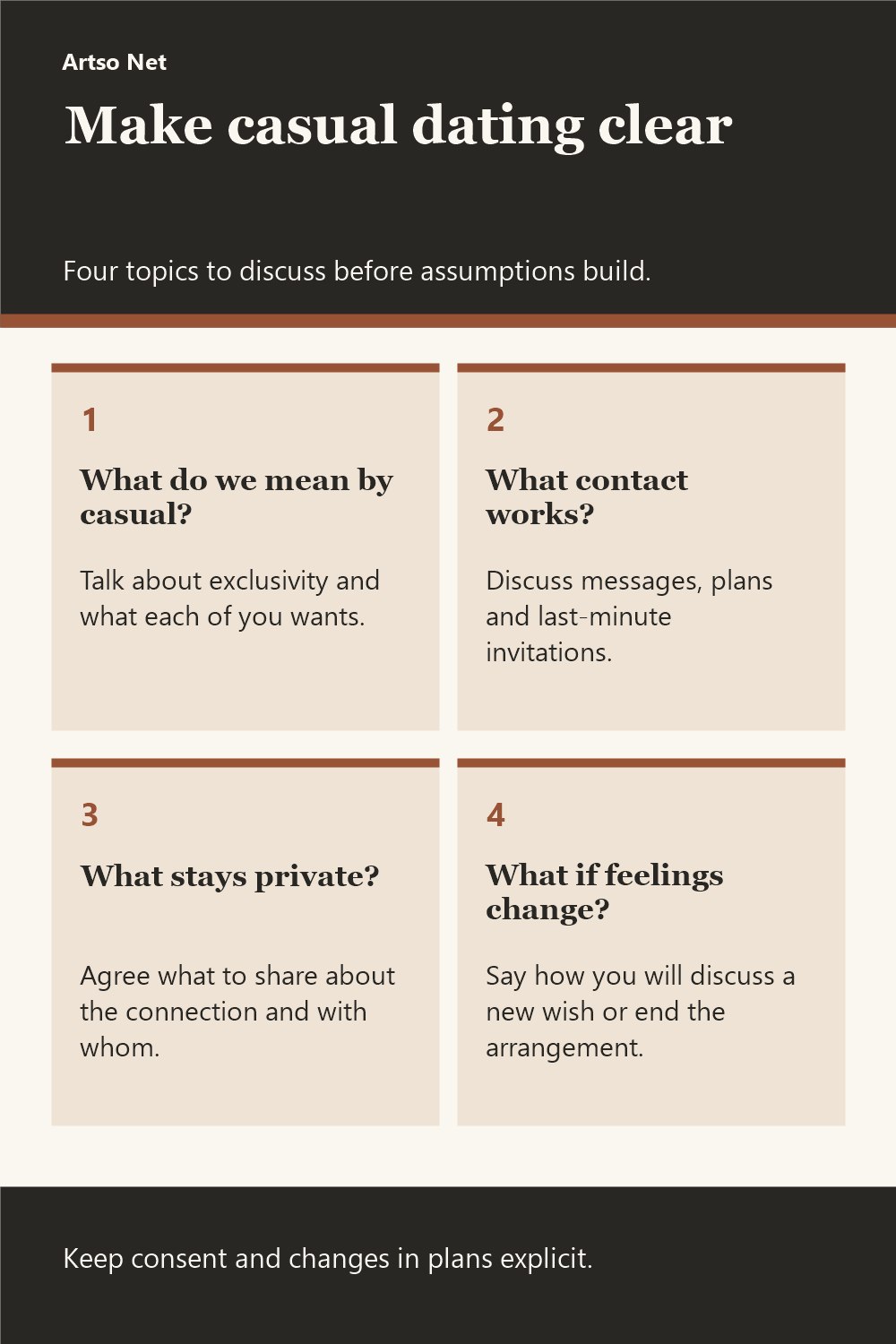
Make casual dating clear Four topics to discuss before assumptions build.
- What do we mean by casual? Talk about exclusivity and what each of you wants.
- What contact works? Discuss messages, plans and last-minute invitations.
- What stays private? Agree what to share about the connection and with whom.
- What if feelings change? Say how you will discuss a new wish or end the arrangement.
Keep consent and changes in plans explicit.