
A woman may want marriage, want it later, prefer a lasting partnership without marrying or choose to remain single. Her reasons can involve personal values, relationships, everyday responsibilities or a life she already enjoys.
There is no single explanation that fits every woman, and a person’s marital status does not tell you whether she is fulfilled, independent or loved. Understanding an individual choice begins with listening to the person making it.
Personal values can lead to different choices
Marriage may carry religious, cultural, family or personal meaning. For someone else, it may not feel necessary to the commitment she wants. People can take love seriously while making different decisions about a wedding or marital status.
Ask yourself what marriage represents to you. Is it a shared promise you want to make, a tradition you value or a step you feel expected to take? Several reasons may exist together. You can explore them without deciding that another person’s choice is less thoughtful or less valid.
Independence can matter within or outside a partnership
Someone may value living alone, choosing her own routines or keeping more time for friends and interests. Another woman may want those same freedoms within marriage. Independence is not a personality trait that automatically makes someone unsuitable for a relationship.
Consider the everyday life you want. How much space, privacy, company and shared responsibility would feel comfortable? The answers can help you discuss a partnership more clearly. Consider the independence you want to retain and the parts of a partnership you would enjoy sharing.
Practical priorities can affect timing
Study, work, caring responsibilities, health or a change of home may take attention that someone does not want to give to a wedding or a new stage of a relationship. Another person may simply feel content with the arrangement she already has.
Waiting can be a deliberate choice. It can also involve uncertainty that someone wants time to understand. You do not owe friends or relatives a complete explanation of private circumstances before your decision deserves respect.
If you want marriage but timing is difficult, identify what you need to consider and which parts of the decision are within your control. You do not have to adopt someone else’s schedule.
The relationship available matters
Wanting marriage does not require accepting a relationship that feels unkind, unequal or incompatible. Staying unmarried may reflect a wish to wait for a partnership that fits, rather than a rejection of partnership itself.
Think about how decisions are made, how disagreements are handled and whether each person can freely express needs. A wedding does not supply respect that is missing from everyday life. Equally, being unmarried does not establish that a relationship lacks commitment.
The National Domestic Violence Hotline’s guide to healthy relationships describes respect, equality and boundaries that matter across different relationship arrangements.
You can respond to pressure without defending your whole life
Questions about marriage may be affectionate, intrusive or both. You can choose how much to share. A brief response might be, “I am comfortable with my decision,” or, “We are discussing our future privately, and I will share news when I want to.”
If the questions continue, repeat the boundary or change the subject. You do not need to compare your life with someone else’s marriage, career or family to justify it.
A supportive conversation leaves room for someone to enjoy her present life and also change her mind later. Neither possibility makes the current decision dishonest.
Discuss different wishes honestly with a partner
If you are in a relationship, distinguish your own preferences from assumptions about your partner. Ask whether each of you wants marriage, what it would mean and whether either person remains uncertain. A label such as “modern” or “traditional” does not answer those questions.
One person’s wish to marry and another’s wish not to marry may be an important incompatibility. Explore whether a freely chosen agreement is possible without promising that patience, pressure or a proposal will change someone’s values.
You can choose marriage, choose another form of partnership or decide that your plans do not fit. The useful measure is whether the choice is informed, mutual and respectful of the life each person wants.
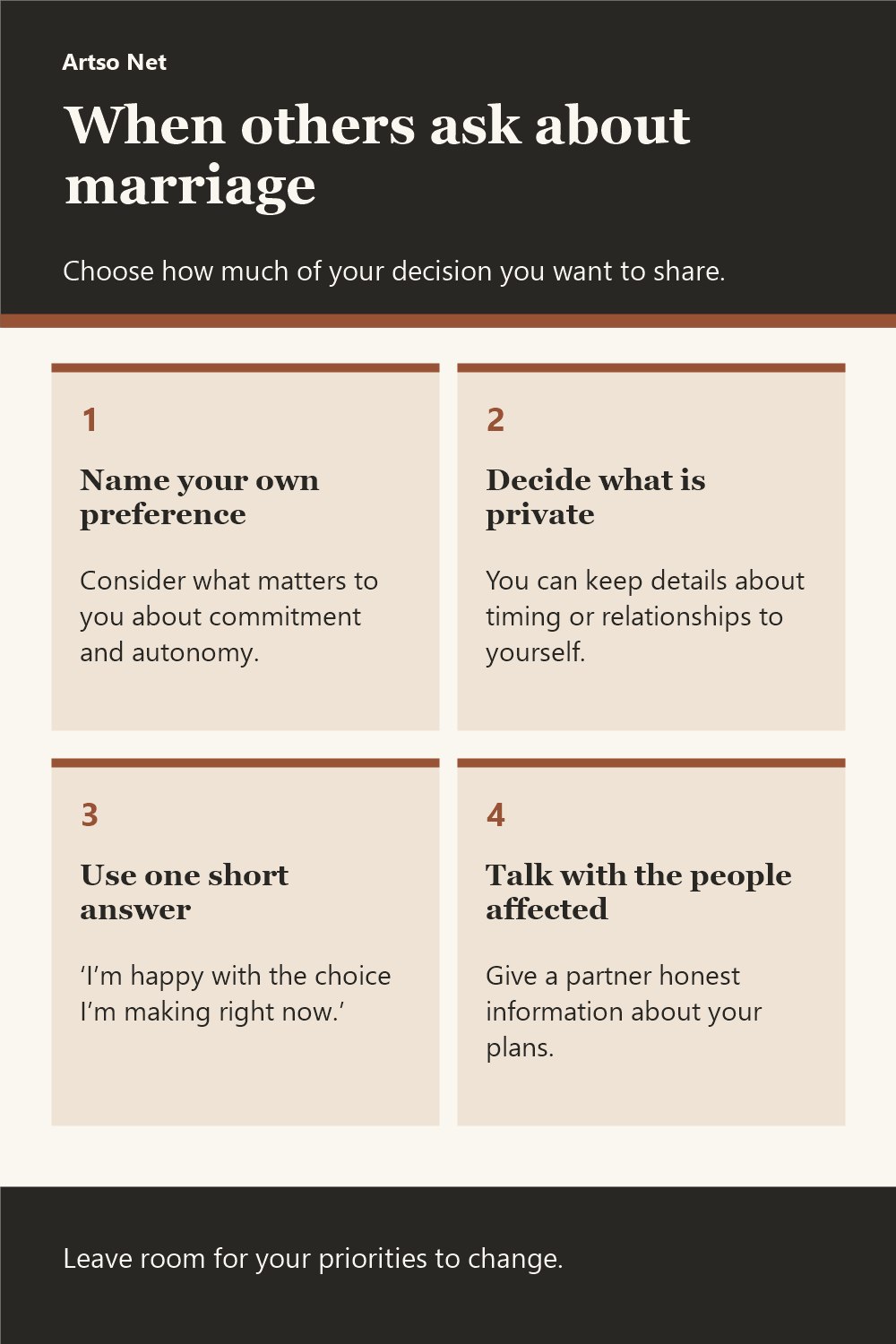
Read the infographic in text
When others ask about marriage Choose how much of your decision you want to share.
- Name your own preference Consider what matters to you about commitment and autonomy.
- Decide what is private You can keep details about timing or relationships to yourself.
- Use one short answer ‘I’m happy with the choice I’m making right now.’
- Talk with the people affected Give a partner honest information about your plans.
Leave room for your priorities to change.