

A long-distance relationship, a friendship that becomes romantic or a comfortable partnership is not automatically a problem. What matters is how the people involved treat one another and whether the arrangement fits what they freely want.
If a relationship feels complicated, name the particular difficulty before deciding what it means. Is there a mismatch in expectations, information being withheld or pressure to remain? The questions below can help you separate a workable difference from a pattern you want to change.
Casual arrangements with different expectations
Friends with benefits and other casual arrangements can work for adults who genuinely want them. The difficulty comes when one person assumes exclusivity, hopes sex will create commitment or agrees mainly because they fear losing the other person.
Ask what the arrangement means to each of you. Talk about contact, exclusivity and what you would do if feelings changed. You can decide that a casual relationship does not suit you without describing everyone who chooses one as careless or incapable of love.
An agreement is something you can revisit. If your wishes no longer fit, neither person has to promise different feelings to keep the arrangement going.
Privacy that becomes unwanted secrecy
Privacy can protect a relationship from unwanted attention, family pressure or an unsafe environment. It is different from being required to accept an explanation you cannot question or secrecy that leaves you unable to make informed choices.
Discuss what you are keeping private, from whom and why. Ask before sharing photographs or personal details. Consider whether the arrangement feels freely chosen and whether you can raise concerns without punishment.
You do not owe family or friends information that would put you at risk. You also do not have to remain in a relationship whose secrecy consistently conflicts with your own needs.
Long distance without a workable plan
Distance creates practical questions about time, travel, money and contact. It does not establish whether someone will be faithful or whether you can build a meaningful bond.
Discuss a realistic communication rhythm, affordable visits and how you will handle changed plans. If living closer matters to either of you, talk honestly about what may be possible rather than making a promise you cannot keep.
The guide to long-distance communication, trust and realistic plans offers more questions to work through together. You may find a workable arrangement or discover that your needs differ.
Existing commitments that are being concealed
Before becoming involved, understand what commitments already exist and what the people affected have actually agreed. Being married or partnered does not tell you every detail of someone’s relationship, and a vague claim that “they know” may leave important questions unanswered.
You can ask directly about relationship status and agreements. You can also choose not to date someone whose circumstances do not fit your boundaries. Do not assume that waiting patiently will produce a separation or a different commitment.
If someone asks you to participate in deception, consider what that means for your own choices and for the people being denied relevant information.

Performing a personality you cannot sustain
Wanting to make a good impression is ordinary. Pretending to share major values, concealing a decision that affects a partner or agreeing to a future you do not want can create a different problem.
Notice where you feel unable to express a preference. Try a clear statement such as, “I enjoy time together, but I do not want to move in.” The response can tell you whether there is room for an honest disagreement.
Being truthful does not require disclosing every private experience on demand. You can keep personal boundaries while being honest about the choices that affect your relationship.
Dating a friend without mutual agreement
Friendship can become romance, remain friendship or need a little distance after feelings are expressed. None of those outcomes is inevitable. The useful question is whether both people want to explore a change.
If you choose to raise it, make room for a genuine no. Avoid treating past kindness, emotional support or time together as a debt someone should repay with a date.
If the answer is no, decide what contact you can comfortably manage. Taking space can be a boundary for your own wellbeing; it should not become a way of making your friend feel guilty.
Practical dependence that limits choice
Sharing housing, money or caring responsibilities can make relationship decisions difficult. Disability, injury or needing care does not make a partnership unhealthy, and giving care does not automatically mean someone is staying out of guilt.
Separate practical needs from the question of whether both people want the romantic relationship. What support, accessible services, housing advice or trusted help might make decisions less constrained?
If you want to leave, planning may take time. You do not have to solve every practical issue in one conversation. If there are threats or control, seek specialist support before discussing plans that could put you at risk.
Comfort that no longer feels freely chosen
A calm, familiar relationship can be deeply valued. Constant excitement is not a test you must pass, and different people place different importance on romance, sex and companionship.
Ask whether the relationship still includes the forms of closeness and shared life that matter to each of you. Are you staying because you value what you have, or because you feel unable to discuss another possibility?
A useful next step might be a conversation, a practical boundary or support with a decision. You do not need to condemn the relationship to recognise that something needs attention.
Read the infographic in text
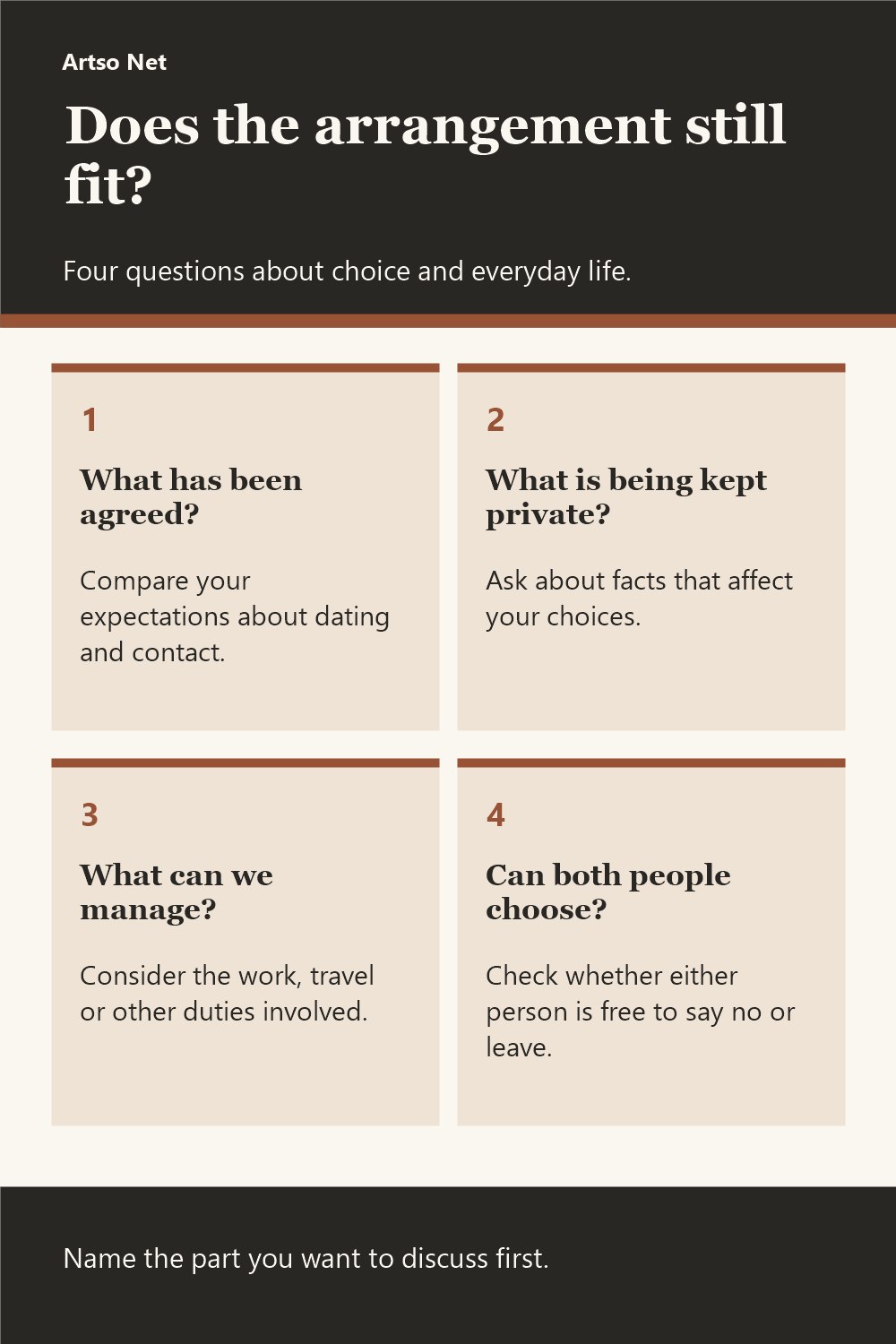
Does the arrangement still fit? Four questions about choice and everyday life.
- What has been agreed? Compare your expectations about dating and contact.
- What is being kept private? Ask about facts that affect your choices.
- What can we manage? Consider the work, travel or other duties involved.
- Can both people choose? Check whether either person is free to say no or leave.
Name the part you want to discuss first.