

Loving someone who hurts you can leave you with conflicting feelings. You may care about them, hope for change, depend on shared housing or feel frightened about what would happen next. Those circumstances deserve understanding. Another person is responsible for their abusive behaviour; staying, returning or finding it difficult to decide does not make the harm your fault.
In this article
Notice the behaviour and its impact
A disagreement, an unkind remark and a pattern of intimidation need different responses. Consider what happens when you say no, ask for privacy or make a choice of your own. Are you listened to, or do you expect threats, punishment, monitoring or physical harm?
You do not need to find a perfect label before taking your experience seriously. Being frightened at home, having your movements controlled or being pressured into sexual contact deserves attention. Affection, shared history and apologies do not cancel out those experiences.
You have the right to refuse physical or sexual contact and to want a life free from abuse. Love does not require you to accept violence. Your confidence, patience or ability to explain yourself does not determine whether someone else is entitled to mistreat you.
Recognise feelings and practical barriers
You may miss the enjoyable parts of the relationship while wanting the hurt to stop. Caring about someone does not establish that remaining together is right for you. Equally, feeling attached does not mean you have failed to understand the situation.
The National Domestic Violence Hotline explains that people stay for many reasons, including fear, limited resources, children and love. This is why a simple instruction to leave can overlook what a person is facing.
Think about the practical questions that matter in your circumstances: a place to stay, income, caring responsibilities, disability support, transport or access to people you trust. You do not have to solve every question at once. Naming a barrier can help you ask for more specific assistance.
Consider safety before major changes
If you are afraid of the other person, consider specialist support before confronting them or announcing a departure. The Hotline’s personal safety planning resource can help you think about options while staying, preparing to leave or after leaving. A plan should fit your circumstances.
If your internet use or devices may be monitored, consider whether another way of contacting support is safer. Do not assume deleting a history removes every trace. A domestic abuse advocate can discuss privacy concerns and the choices available.
If you are in immediate danger, contact local emergency services if you can do so safely. Outside the United States, look for a domestic abuse service in your country or region. You can ask what a service offers before deciding what information to share.
Ask for support that fits your circumstances
A trusted person may be able to listen, help with transport or stay in contact at an agreed time. You could say, “I am not ready to explain everything, but I need someone to listen,” or, “Can you help me find out what support is available?” Choose what feels possible for you.
You do not have to manage the relationship entirely alone or prove that the other person is incapable of change. Their responsibility is to address their behaviour. Your choices can be based on the treatment you are experiencing, including whether your limits and decisions are respected.
Support should leave room for your decisions. If someone gives advice that feels too fast or impractical, you can explain the obstacle or seek another source of help. An individual conversation with an advocate can be useful even when you have not decided whether to stay or leave.
Choose one next step you can manage
Your next step might be speaking privately with a support service, asking a trusted person for practical help or identifying one unanswered question. If keeping written notes could put you at risk, you do not have to make a record. Choose a way of thinking or talking that takes your circumstances into account.
If you are supporting someone else, listen without asking them to defend why they have stayed. Offer concrete help you can actually provide and respect their pace. Keep responsibility for the harmful behaviour with the person causing it.
You deserve care now. You do not have to become more independent, confident or self-loving before your safety and choices matter.
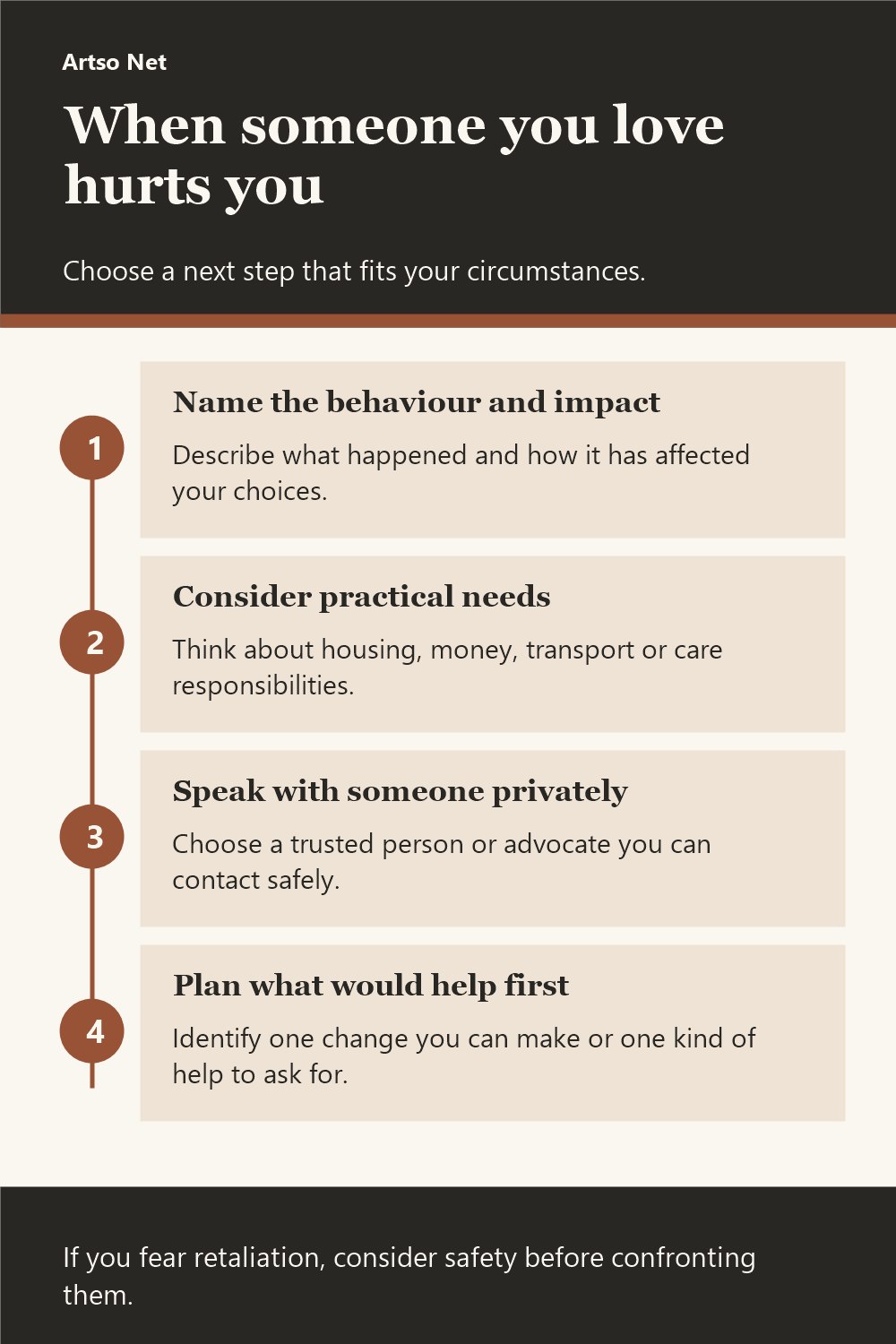
Read the infographic in text
When someone you love hurts you Choose a next step that fits your circumstances.
- Name the behaviour and impact Describe what happened and how it has affected your choices.
- Consider practical needs Think about housing, money, transport or care responsibilities.
- Speak with someone privately Choose a trusted person or advocate you can contact safely.
- Plan what would help first Identify one change you can make or one kind of help to ask for.
If you fear retaliation, consider safety before confronting them.