

It can hurt when you hope for romance and a friend wants friendship. You may look back at messages, compliments or time spent together, wondering whether you misunderstood. Friendly warmth can matter deeply without being an invitation to date.
You do not need a theory about what men or women secretly want. A clearer starting point is what each person has actually said, what kind of connection is available and whether that connection works for you. Friendship and romance both depend on willing participation.
On this page
1. Separate friendship from a dating agreement
A friend may enjoy your company, admire you and offer support while having no romantic interest. There may be an explanation they want to share, but they do not have to provide a detailed account of attraction to make their answer valid.
Someone might want no relationship, want a different kind of relationship or simply not want to date you. None of those possibilities makes friendship dishonest or establishes your worth. Avoid treating attention, gifts or helpfulness as payments that should earn romance.
A warm connection can still have limits
Long conversations and affectionate messages can mean different things to different people. When their meaning matters to your decisions, discuss it. A collection of clues cannot create an agreement that neither person has made.
2. Ask clearly if the answer is unknown
If you want to ask about dating and they have not already declined, use a simple invitation: “I enjoy spending time with you. Would you like to go on a date?” Choose a situation where they can answer freely and leave the conversation if they wish.
A clear invitation is easier to respond to than a series of tests or hints. You can say that you value the friendship without promising that nothing will feel different afterwards. Both people may need time to adjust.
If the response is vague, one clarification may help: “Do you mean you want to keep this as friendship?” You can decide not to pursue dating without extracting a more satisfying explanation.
Accept the answer that is available
If they say no or describe you as a friend, take that as the current answer. Repeated invitations, jealousy tactics or becoming indispensable are not ways to establish mutual interest. If they later want something different, they can communicate that themselves.
3. Choose whether friendship fits
You may want to continue a friendship, need some distance or feel unable to stay close. Consider what you can offer honestly. Remaining nearby only to monitor their dating life or wait for your turn can be painful for both people.
Ask yourself whether you would still choose the friendship if romance never developed. An uncertain answer is useful information. You can value someone and need a different amount of contact.
Explain a break without making it a punishment
Try: “I respect that you do not want to date. I need some space from one-to-one plans while I work out what feels manageable.” Describe your own plans rather than asking them to reconsider in exchange for continued friendship.
A break does not have to come with a promised return date. If you share work, classes or friends, discuss the practical contact you still need. Courteous necessary interaction can coexist with less personal conversation.
4. Respect privacy and everyday limits
Clarify situations that have become uncomfortable, such as late-night calls, flirtatious jokes or discussing new dates. Neither person has to accept closeness that now feels difficult. Equally, a boundary about your participation does not give you authority over whom the other person sees.
Keep the conversation private unless there is a reason to seek support. You can confide in someone trustworthy without inviting a mutual friend to persuade the person to date you or report on their activities.
Discuss what happens online
Muting updates, reducing messages or asking not to be tagged can create useful room. Avoid posting an indirect accusation or sharing private messages to prove your interpretation. Love is respect’s guide to digital boundaries offers further questions about contact, posts and privacy.
5. Review what you need next
Check whether the arrangement you chose feels workable after some time. Are you enjoying the friendship available, or repeatedly leaving interactions hoping for a different answer? You can change your level of contact without blaming either person for the mismatch.
Spend time on other relationships and activities because they matter to you, rather than to demonstrate what your friend is missing. If you want to date other people, do so when it fits your interest and capacity.
The useful question is what you can willingly participate in now. A respectful answer can include friendship, more distance or moving on from the connection.
Read the infographic in text
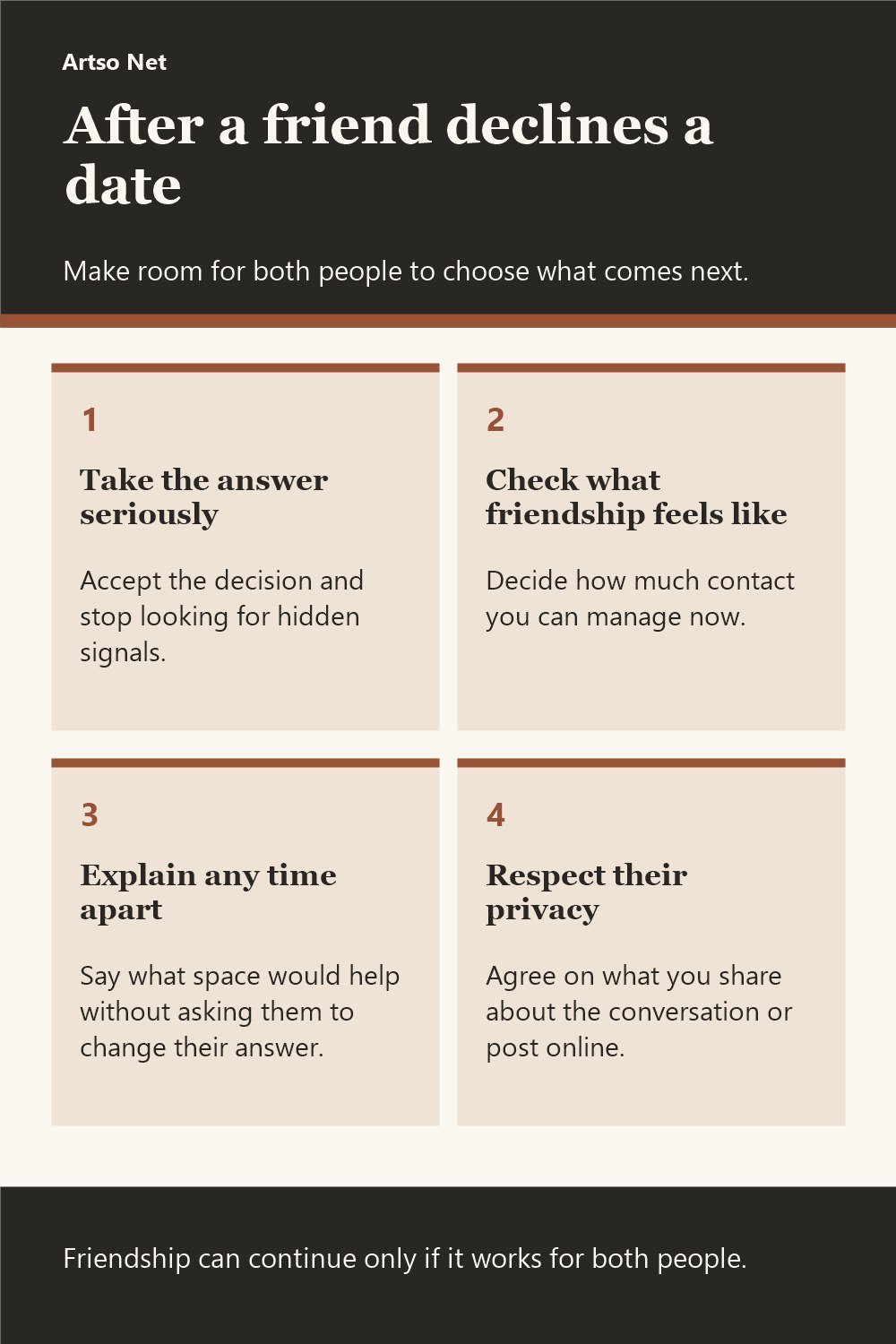
After a friend declines a date Make room for both people to choose what comes next.
- Take the answer seriously Accept the decision and stop looking for hidden signals.
- Check what friendship feels like Decide how much contact you can manage now.
- Explain any time apart Say what space would help without asking them to change their answer.
- Respect their privacy Agree on what you share about the conversation or post online.
Friendship can continue only if it works for both people.