

When you like a friend, small interactions can begin to feel full of clues. A long conversation, a casual invitation or a change in how often they text may leave you wondering whether there is romantic interest. Those moments rarely give a complete answer.
You can take an interest in someone without turning their appearance, social plans or choice of words into proof. Start by separating what you have observed from what you hope it means, then consider whether a clear question would help.
On this page
Separate observations from interpretations
What you noticed: they wore casual clothes when you met. What you cannot conclude: that they have no romantic interest. People dress for comfort, weather, work and many other reasons. Clothing is a poor substitute for asking what kind of connection they want.
Frequent messages can show that someone enjoys talking with you. They do not establish that the person wants a date or a committed relationship. Equally, a busy weekend or a slow reply does not reveal everything about their feelings or circumstances.
Talking about other people they date or introducing you as a friend may be relevant context. Listen to what they actually say, especially if they have clearly described the relationship as friendship. Avoid creating a competing explanation that makes a stated boundary disappear.
Name the kind of connection you want
Before trying to work out what someone else wants, identify your own question. Would you like one date? Are you already physically involved and wondering about commitment? Do you want more dependable friendship? These are different conversations, and a vague question about whether they “like” you may leave them unresolved.
It can help to write down the arrangement you would be comfortable with and what would not work for you. You might enjoy casual dating, want exclusivity or need a friendship with less emotionally intense contact. Your preference does not make the other person wrong for wanting something else.
Ask a clear question without a test
A direct invitation can remove one layer of guesswork: “I enjoy our time together, and I’m interested in going on a date. Would you like that?” Use words that distinguish the invitation from ordinary plans. Give the person a real opportunity to decline.
Choose a setting where neither person feels cornered or watched by a group. Avoid manufacturing jealousy, cancelling plans to see whether they chase you or recruiting friends to investigate their feelings. If a work or housing dependency makes the situation difficult, consider that before raising the subject.
You may prefer a short message if speaking feels difficult. Keep it clear and allow time for a response. Repeated follow-ups can add pressure, even when your intention is simply to reduce your own uncertainty.
Take the answer seriously
If they want friendship, believe that answer. You can be disappointed without treating friendship as an insult or assuming that persistence will uncover hidden love. If they are unsure, there is not yet a shared agreement to date. You can decide whether continuing in uncertainty suits you.
If you have already kissed or had sex, talk separately about what each person wants from the relationship. Physical intimacy does not automatically create exclusivity or commitment. Each person’s consent and boundaries still matter, and either person can decline further intimacy.
If they agree to a date, make a plan and let the connection develop through actual conversations and experiences. You do not need to decide immediately whether the friendship will become a long-term partnership. Check that your expectations are compatible as you go.
Choose what works for you next
Once you have clearer information, think about what contact you can manage. You might continue the friendship, take a short break from one-to-one plans or stop discussing each other’s dating lives. Explain a limit as something you need, rather than a consequence designed to change their answer.
You can say: “I value you, but I need some space from personal chats while my feelings settle.” They may have needs of their own. Neither person has to promise that the friendship will immediately feel the way it did before.
Make room for your wider life while you decide. Spend time with other friends, continue activities that matter to you and ask for support if the uncertainty has become overwhelming. You can care about this person without keeping your own life on hold for a possible future relationship.
A useful outcome is clearer understanding of what each person is willing to offer. An answer you hoped for is only one possibility. Respecting the answer and your own limits gives both people more room to choose honestly.
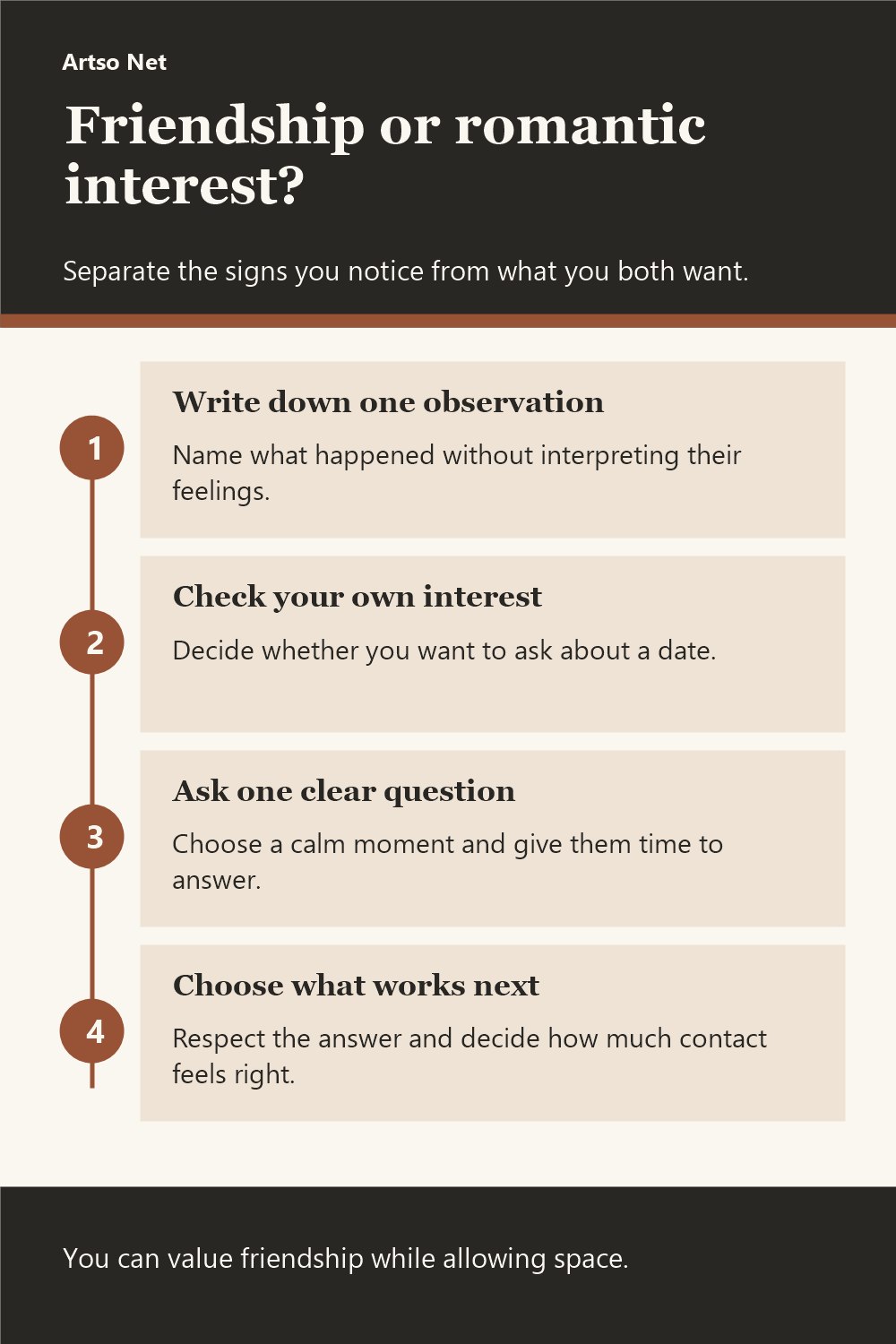
Read the infographic in text
Friendship or romantic interest? Separate the signs you notice from what you both want.
- Write down one observation Name what happened without interpreting their feelings.
- Check your own interest Decide whether you want to ask about a date.
- Ask one clear question Choose a calm moment and give them time to answer.
- Choose what works next Respect the answer and decide how much contact feels right.
You can value friendship while allowing space.