

Sexual attraction can be part of a relationship without telling you whether either person wants romance, exclusivity or a lasting partnership. You may also want affection or a romantic relationship without wanting sex.
Instead of trying to decode another person’s feelings from a gesture or a single conversation, discuss what each of you wants and what you are agreeing to. These questions can help you decide whether the arrangement fits.
Understand what attraction can and cannot tell you
Feeling drawn to someone is information about your experience. It does not establish their intentions, predict a future relationship or tell you how they will treat you.
You can enjoy attraction while taking time to learn more. You can also decide that you do not want to act on it.
A connection does not need to follow a universal order from sex to romance to commitment. People may want different combinations of closeness, and those wishes can change.
Separate sex, romance and everyday care
Ask what you enjoy and what you hope for. You might value physical intimacy, affectionate time together, shared activities, emotional support or plans for a future partnership.
Spending time outside sex can help you learn about a person, but it is not a test that proves love. Likewise, frequent sex does not prove that someone is uninterested in a relationship.
Care includes how you respond to each other’s needs and limits. Whatever the arrangement, both people deserve honesty and respect.
Ask what each person wants now
Try a clear opening: “I enjoy being with you, and I would like to understand what you want from this.” Then describe your own wishes without requiring the other person to match them.
If someone says they want casual dating or a sexual connection, treat that as their current answer. Do not assume that enough time, affection or patience will change it.
You may both be unsure. Say what remains undecided and consider what boundaries would make continuing comfortable. Uncertainty does not require you to accept an arrangement you do not want.
Make important agreements explicit
Discuss exclusivity, contact between meetings, privacy and any practical expectations that affect your choices. A relationship label can mean different things, so ask what you each mean by it.
Consent remains necessary each time, including in an established relationship. Agreeing to a date, visiting someone’s home or having sex previously does not require you to agree again.
If sex is part of the relationship, talk about protection and personal health questions before relying on assumptions. A qualified sexual health professional can help; the NHS guide to visiting a sexual health clinic explains the support those services offer.
Revisit the conversation when something changes
Feelings, time and circumstances may change. You can say, “I am becoming more attached,” or, “I no longer want the arrangement we agreed.” Raising a change gives both people relevant information.
Ask whether your expectations still fit rather than assuming that closeness has silently created a new agreement. If you want exclusivity or more commitment, discuss it directly.
Give the other person room to answer honestly. An unwelcome answer may still help you decide what to do next; it is not something you have to negotiate into a different feeling.
Consider whether the arrangement suits you
Notice its effect on your life. Are you enjoying what is actually being offered, or agreeing mainly because you hope it will eventually become something else?
A mismatch does not make either person wrong for wanting a different relationship. It can still mean that continuing is not a good choice for you.
You can decide that an unresolved issue matters enough to step away. You do not need to prove that every difference is impossible to resolve before taking your own needs seriously.
Choose a next step with care
You might continue with clearer agreements, pause optional contact or end the relationship. Where it is welcome and safe, communicate your decision plainly without promising future contact you do not want.
Keep support and everyday routines around you after a difficult decision. You can take time before dating again or choose to meet people when that feels right; there is no required recovery timetable.
If pressure, threats or fear make a conversation unsafe, seek individual support before discussing your plans. Your feelings can matter deeply while your boundaries and freedom to choose remain equally important.
Read the infographic in text
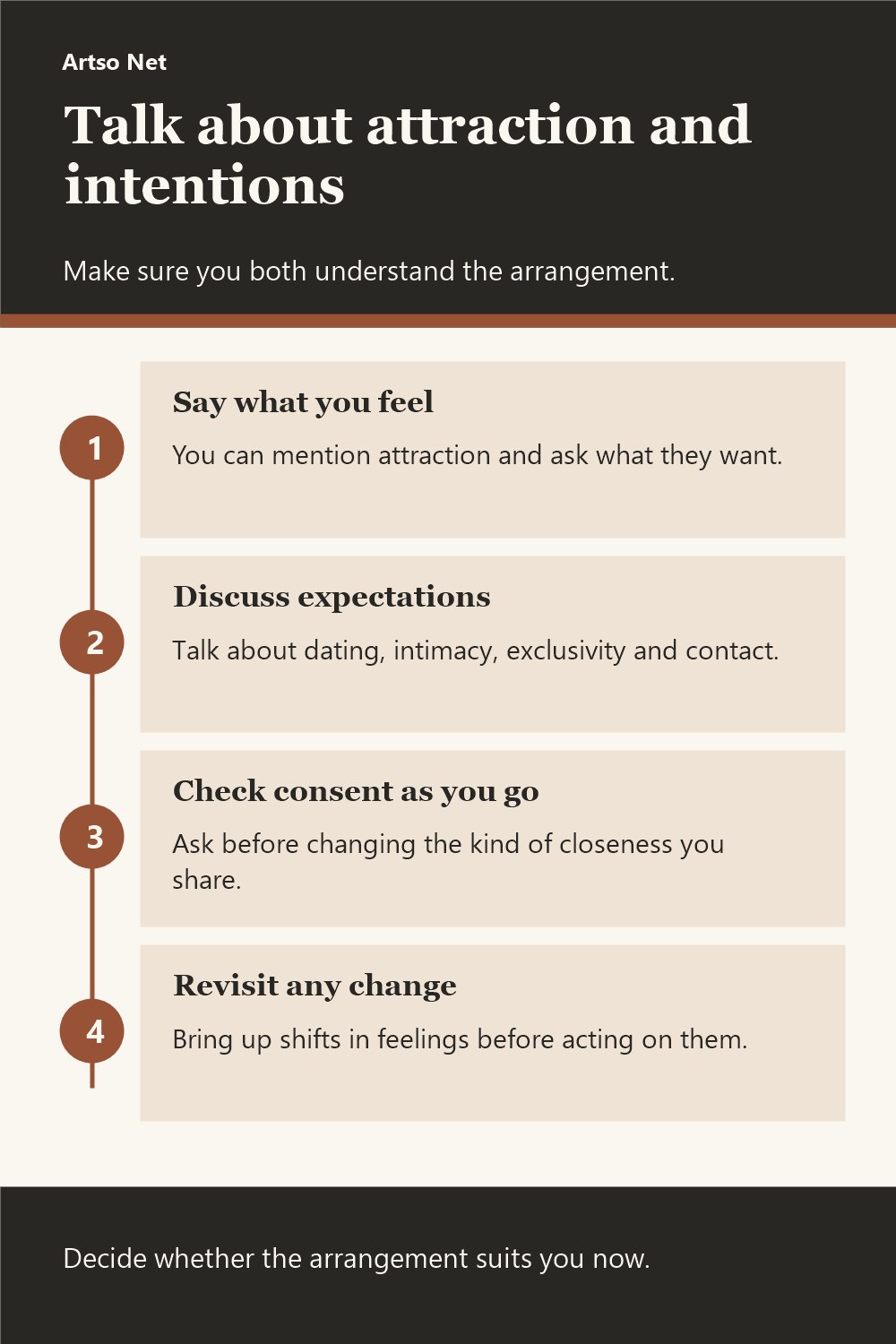
Talk about attraction and intentions Make sure you both understand the arrangement.
- Say what you feel You can mention attraction and ask what they want.
- Discuss expectations Talk about dating, intimacy, exclusivity and contact.
- Check consent as you go Ask before changing the kind of closeness you share.
- Revisit any change Bring up shifts in feelings before acting on them.
Decide whether the arrangement suits you now.