

Caring deeply for someone who does not want the same relationship can be painful, especially when that person is already part of your daily life. You may miss what you hoped would happen as much as what you actually shared.
You do not have to feel fine immediately. You can take your feelings seriously while respecting the other person’s freedom to choose. Moving forward begins with responding to the relationship available to you, rather than trying to earn a different answer.
Separate their answer from your worth
Someone can like you, value your friendship and still not want a romantic relationship. Their feelings are not a verdict on whether you are interesting, attractive or worthy of care. They also do not create an obligation for you to keep offering the same closeness.
Try separating the fact from the story you are telling yourself. “They do not want to date me” describes an answer. “Nobody will ever choose me” predicts a future you cannot know. When that prediction returns, bring your attention back to what happened and what you need today.
You can feel disappointed or angry without acting against them. Their lack of romantic interest does not make them wrong, and your sadness does not make you unreasonable.
Seek clarity once, when a conversation is appropriate
If you have not discussed your feelings and the situation is genuinely unclear, a direct, low-pressure conversation may help: “I have romantic feelings for you. Would you want to explore dating, or do you see this as friendship?” Choose a private, ordinary moment when either person can leave comfortably.
A clear no needs no further testing. Avoid repeated confessions, arguments about your compatibility or gifts meant to change the answer. If they remain uncertain, you can decide that waiting is not right for you. You do not need to establish what they might feel someday before choosing a boundary now.
Choose a level of contact you can manage
Some people can continue a friendship; others need distance, temporarily or for longer. Ask what happens after contact. Do you enjoy it as friendship, or spend the next day analysing every message and hoping the answer has changed?
You might reduce one-to-one evenings, mute social updates or pause personal conversations. A simple explanation can be enough: “I respect your answer, and I need some space while my feelings settle.” Distance works best as care for yourself, rather than a tactic to make them miss you.
If you work together or share responsibilities, keep necessary communication brief and practical. You do not need to disclose your feelings to mutual friends or ask them to investigate on your behalf.
Give difficult feelings somewhere to go
You may feel embarrassed, lonely, relieved or several things at once. Writing privately, walking, making something or talking with a trusted person can give those feelings room without turning every difficult moment into another message to the person you love.
Ask for the support you want: “Could you listen for a while without suggesting how to win them over?” If replaying conversations is keeping you stuck, choose one manageable interruption, such as putting your phone away during dinner or spending an evening with someone outside that friendship group.
There is no useful deadline for being over it. Look for small changes in how much room the situation takes up, rather than demanding that your feelings disappear.
Let friendship and dating remain choices
You do not owe anyone a friendship you currently find too painful. Equally, friendship is not a waiting room in which romantic persistence eventually earns a reward. If you stay friends, check that you can respect their dating choices without treating them as a betrayal.
You also do not need a replacement relationship to prove you are moving on. Meet other people when you want to, and be honest about what you can offer. A quiet period spent on friends, interests or everyday responsibilities can be a valid choice.
Make a small plan for the next few days
Choose a contact boundary, arrange one supportive conversation and put one enjoyable or necessary activity in your calendar. Keep the plan realistic enough to follow on a difficult day. For example: mute their updates, have lunch with a friend and return to a class you enjoy.
If the distress is making daily life difficult, consider speaking with a qualified professional. The NHS guidance on relationships and mental wellbeing offers further ways to think about communication, boundaries and support.
Progress does not require a promise that another relationship is coming. It can begin with having more of your attention, time and choices available to you.
Read the infographic in text
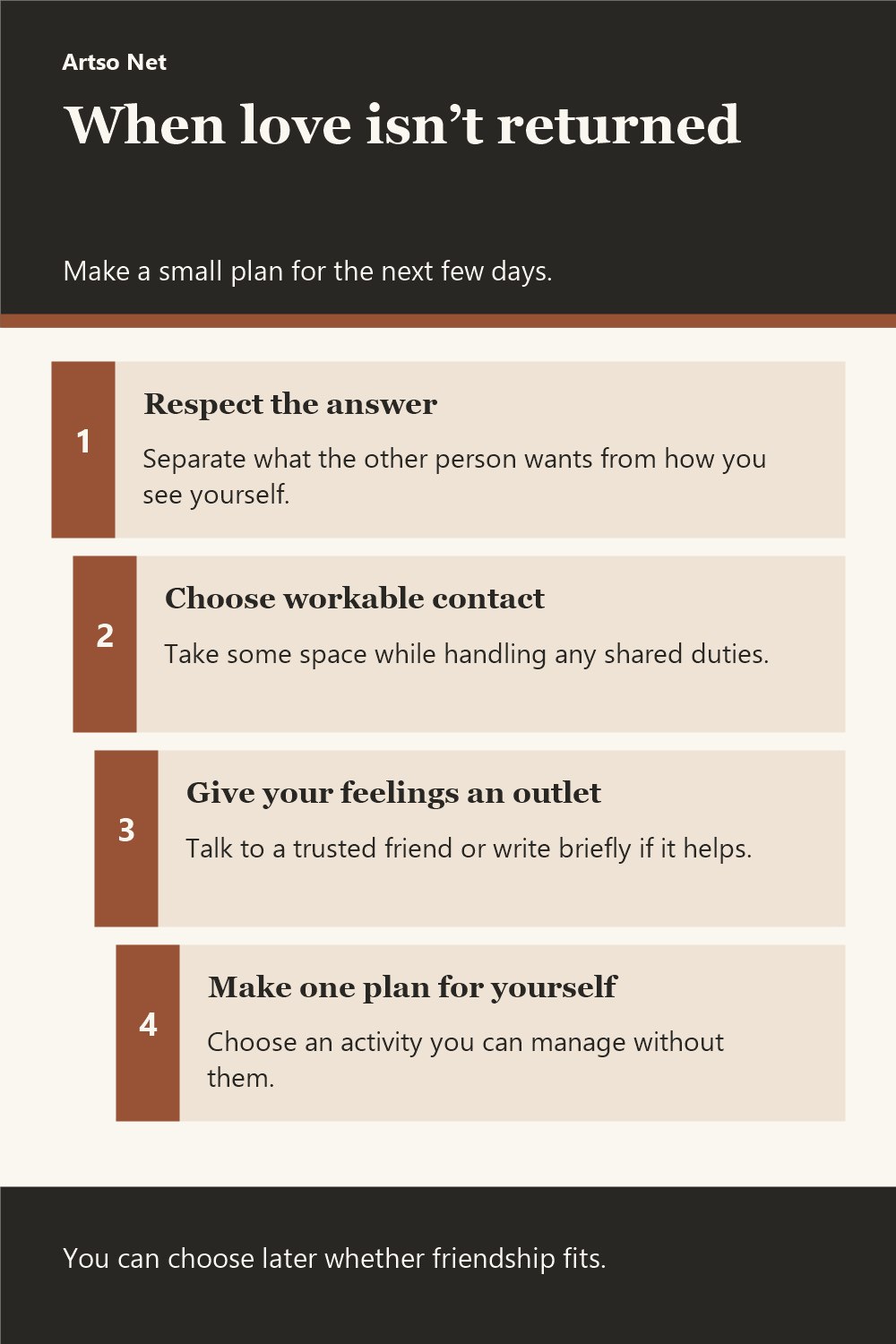
When love isn’t returned Make a small plan for the next few days.
- Respect the answer Separate what the other person wants from how you see yourself.
- Choose workable contact Take some space while handling any shared duties.
- Give your feelings an outlet Talk to a trusted friend or write briefly if it helps.
- Make one plan for yourself Choose an activity you can manage without them.
You can choose later whether friendship fits.