

Small moments can make a relationship feel more familiar: remembering a preference, sharing a joke or making room for an ordinary evening together. You can appreciate those moments without treating them as evidence that a partnership must last.
The useful measure is whether growing familiarity comes with respect, choice and consideration. You do not have to reach the same milestones as another couple or follow a particular timetable.
You learn preferences while leaving room for a choice
Knowing a favourite meal, a comfortable meeting place or how someone likes their tea can be a warm sign of attention. It becomes more useful when you still ask rather than assuming you can decide for them.
“Would you like your usual?” leaves room for a different mood, appetite or preference. Ordering without asking is not a relationship achievement if the other person would rather choose.
The same applies to clothing and belongings. Familiarity can make borrowing feel easy, but permission and care for another person’s things still matter.
You can relax without having to perform
You may begin to feel comfortable in everyday clothes, during a quiet evening or when conversation is not especially entertaining. That can be meaningful without calling your ordinary appearance “gross” or expecting a partner to prove their affection.
Comfort should leave room for difference. One person may enjoy dressing up while another prefers a casual routine; neither choice automatically reveals how serious the relationship is.
Ask yourself whether you feel free to be ordinary and whether you offer that same ease to the other person.
You can ask for support and hear an honest answer
Being able to ask for a lift, a listening ear or help with a practical problem may build trust. Be specific about what you need, and make room for the other person to explain what they can realistically offer.
Your partner does not have to be the first person you call in every situation. Sometimes a friend, neighbour, professional service or someone nearby is better placed to help.
Notice the pattern: are your needs taken seriously, and can you discuss disappointment respectfully? One unavailable evening is different from repeated dismissal or refusal to acknowledge a concern.
Shared space and routines remain mutual
A toothbrush at someone’s home, a shared meal or a regular evening together can make a relationship feel more settled. Talk about the arrangement rather than quietly treating it as permission for unlimited visits or access.
A key should come with a clear understanding of when it can be used. Knowing someone’s schedule does not remove the need to check whether a plan suits them.
Helping with dishes or another task can be considerate when it is welcome. Discuss responsibilities in a way that reflects time, energy, health and preferences, rather than assuming one person will become the default carer or housekeeper.
Your wider connections and private life have room
Getting to know people who matter to your partner may feel like growing closeness. It should happen at a pace that suits everyone involved, including people with difficult family relationships or reasons to keep parts of life private.
You do not need contact with every relative, access to a device or shared account passwords to establish trust. The Hotline’s relationship spectrum describes space, boundaries and equal choice as parts of a healthy relationship.
Shared jokes or a favourite programme can be enjoyable rituals. They do not replace friendships, personal interests or a conversation about what you each want.
Use the moments to start a clearer conversation
If a small change feels important, say what it means to you: “I like that we are spending ordinary evenings together. How are you feeling about where this is going?” You may discover that you attach different meanings to the same routine.
The NHS guidance on relationships and mental wellbeing encourages open conversation, listening and boundaries. Those habits can help you discuss closeness without turning it into a checklist.
Enjoy what feels mutual, ask about what remains unclear and pay attention to how your choices are received. A meaningful milestone is something you can share freely, rather than a test you must pass to deserve love.
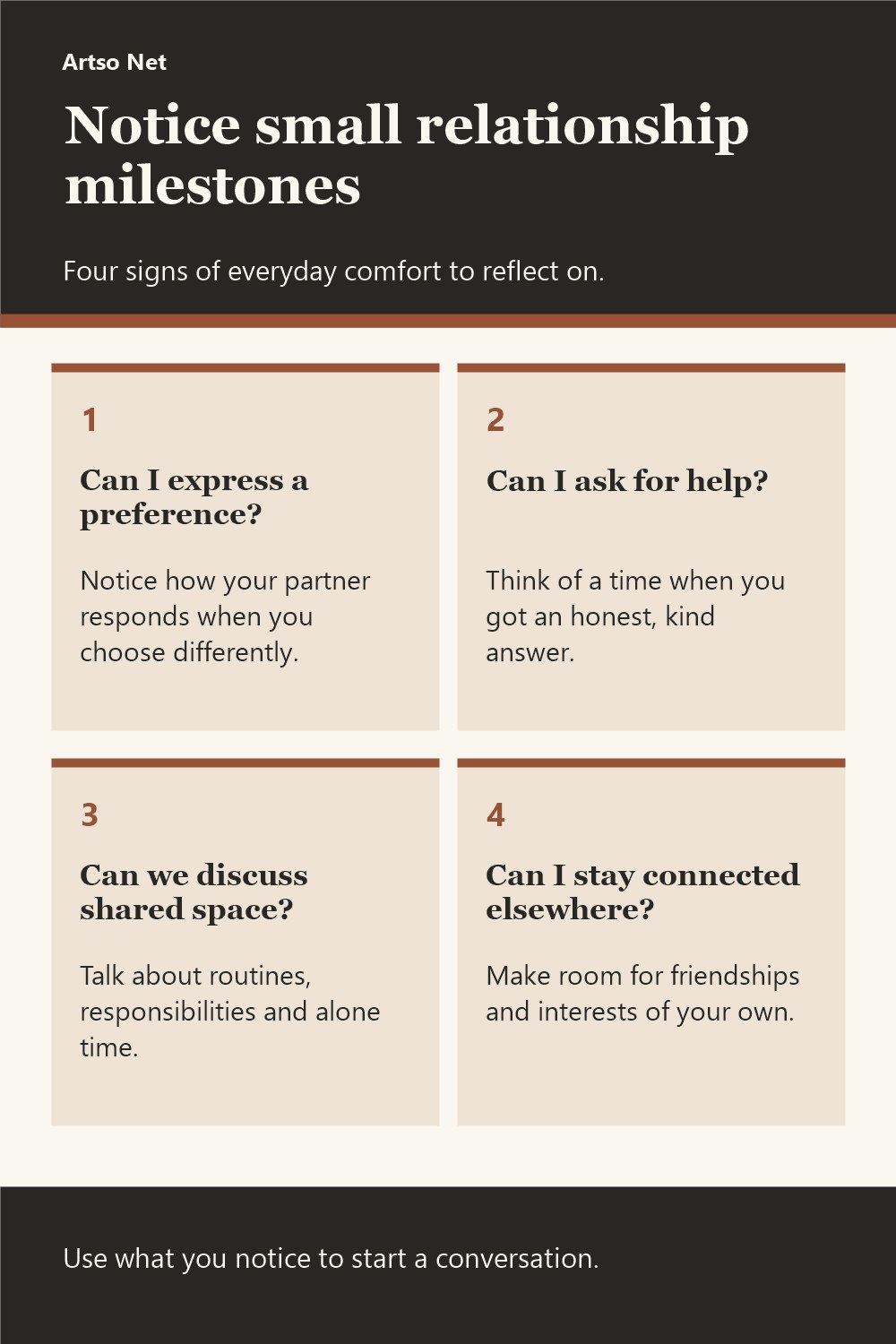
Read the infographic in text
Notice small relationship milestones Four signs of everyday comfort to reflect on.
- Can I express a preference? Notice how your partner responds when you choose differently.
- Can I ask for help? Think of a time when you got an honest, kind answer.
- Can we discuss shared space? Talk about routines, responsibilities and alone time.
- Can I stay connected elsewhere? Make room for friendships and interests of your own.
Use what you notice to start a conversation.