

A relationship becoming more serious can mean different things: exclusivity, a stronger emotional bond, shared plans or a future together. Shopping together, exchanging gifts or meeting a parent may feel meaningful, but none of those gestures supplies an agreement you have not discussed.
Use these questions to notice what is developing and to talk about what you each want. They are conversation prompts, rather than a score or a prediction of how long the relationship will last.
What does serious mean to each of you?
Begin with the definition. Are you talking about dating only each other, making a long-term commitment or simply spending more time together?
You might say: “I am enjoying this and would like to talk about what we are building.” Ask what they want too. A clear difference in intentions matters more than a collection of reassuring clues.
Is your time together reliable and freely chosen?
Notice whether both people suggest plans, follow through and make room for ordinary responsibilities. Time together can build closeness without needing to fill every evening.
Work, health, parenting, travel and money can affect availability. Discuss what is realistic rather than treating constant access as proof of love.
Can you choose how to meet important people?
Meeting friends or family may feel significant, but timing and safety differ. Some people have difficult family relationships or privacy concerns; an introduction should not require someone to disclose more than they want.
Ask what an introduction means to each of you. It does not automatically establish exclusivity or an intention to marry.
Are everyday plans becoming easier to share?
Cooking, shopping or planning a weekend together may show that you enjoy ordinary companionship. Notice whether the practical effort is shared in a way that works for both people.
A grocery trip is still a grocery trip unless you have discussed something more. Let the comfort matter without making it prove the future.
Is future talk specific enough to discuss?
There is a difference between enjoying an imagined holiday and making an actual plan. Ask whether a suggestion is an idea, an intention or an agreed next step.
You can be hopeful while staying honest about uncertainty. Avoid making promises mainly to reassure a partner when you are not ready to keep them.
Do your important goals have room in the conversation?
Discuss topics that affect the relationship you want, such as children, where to live, work or the kind of commitment you are seeking. You do not need to settle everything at once.
Listen for genuine agreement as well as important differences. Growing affection does not make every life goal compatible.
Can you consider each other without needing permission?
It can be considerate to discuss a decision that will affect shared plans. That is different from requiring approval for every purchase, friendship or personal activity.
The Hotline’s relationship spectrum emphasises equal choice and respect for boundaries. Commitment should leave room for both people’s autonomy.
Can you discuss costs and financial boundaries?
Be clear about the costs of dates, trips or other plans before making assumptions. A workable conversation might cover what each person can afford and how a shared expense will be handled.
Seriousness does not require access to bank accounts, private records or passwords. Keep major financial commitments separate from the wish to prove trust.
Are housing ideas a choice rather than a test?
If living together becomes relevant, talk about practical needs, privacy, responsibilities and what each person actually wants. Imagining a house together is not the same as agreeing to move.
You can take a relationship seriously while choosing separate homes. A useful next step is one both people understand and freely choose.
Do gifts reflect care without replacing clarity?
A useful or thoughtful gift may show attention to your preferences. Its meaning still depends on your relationship and what has been said.
You do not need to measure commitment through spending, and accepting a gift does not create an obligation to offer sex, access or a deeper commitment.
Does communication fit both people’s lives?
Talk about what contact you enjoy and what you need for practical plans. Some couples like frequent messages; others prefer a call or time together later.
Neither a constant stream of texts nor a quieter day proves the depth of someone’s feelings. Look at the wider pattern of consideration and follow-through.
Can you share ordinary experiences and ask for support?
Being able to mention good news, worries or an uneventful day may be part of growing closeness. Notice whether listening and support can go both ways.
Your partner need not meet every need or be your only source of support. Friendships, family connections and personal interests still matter.
What happens when you disagree or need space?
Consider whether you can discuss a problem without threats, humiliation or pressure. Taking a break from an argument can be useful when both people understand how to return to the conversation.
Staying through harm is not a measure of commitment. The NHS guidance on relationships and mental wellbeing includes boundaries, time for yourself and support outside the relationship.
Can you agree on the next step directly?
Ask about the choice that matters now: “Would you like us to date exclusively?” or “Is moving in something you want to explore, or are we only imagining it?”
A useful answer may be yes, no or an honest statement of uncertainty. Choose your response using that information and the person’s behaviour, rather than trying to turn small gestures into a promise.
Read the infographic in text
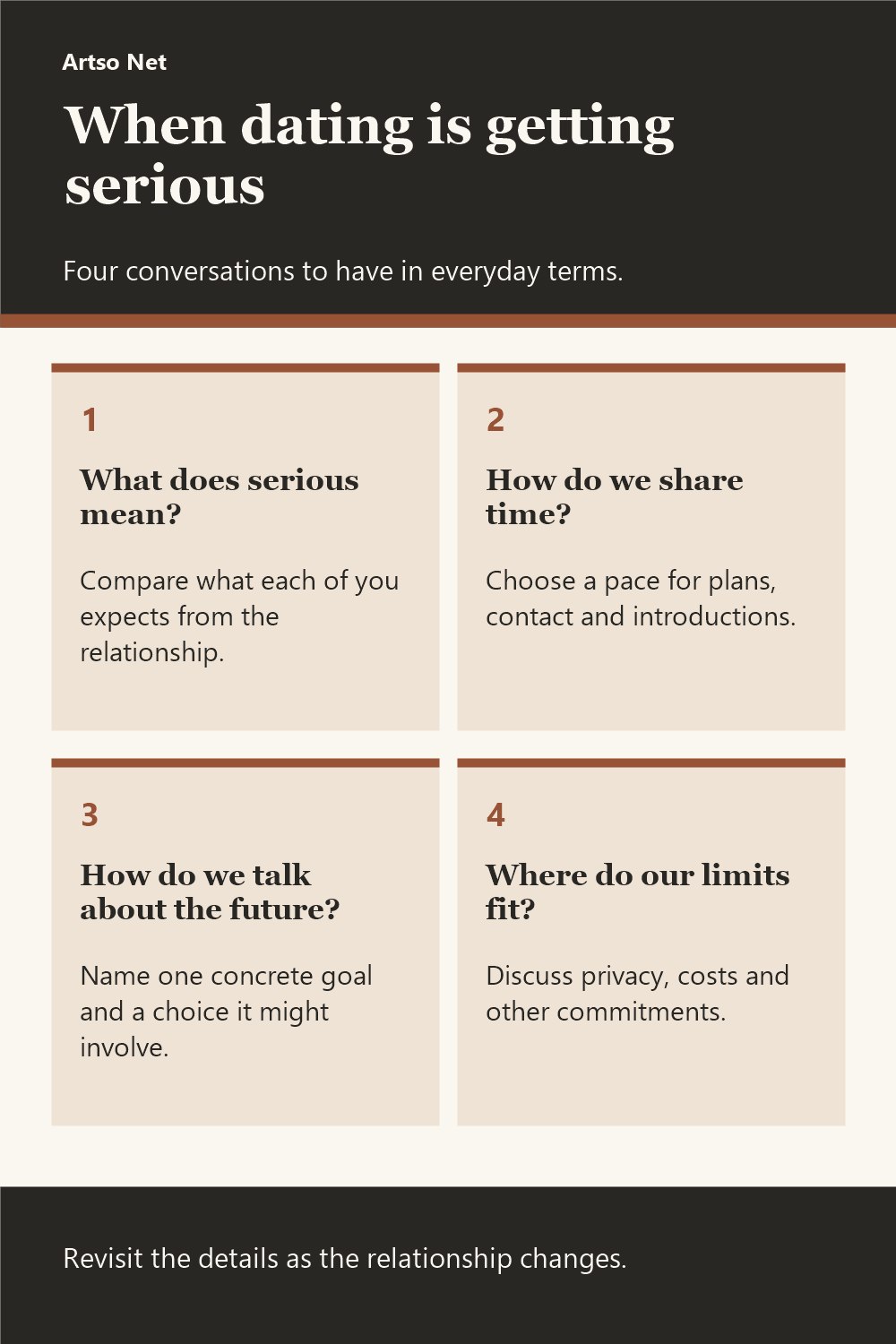
When dating is getting serious Four conversations to have in everyday terms.
- What does serious mean? Compare what each of you expects from the relationship.
- How do we share time? Choose a pace for plans, contact and introductions.
- How do we talk about the future? Name one concrete goal and a choice it might involve.
- Where do our limits fit? Discuss privacy, costs and other commitments.
Revisit the details as the relationship changes.